Rancho Margot
Volunteering at an off-grid ranch in Costa Rica in 2013: compost, corrals, gardens, and an Excel farm-management system built between shovels.
At a glance
- Role
- Volunteer
- When
- Early 2013
- Where
- El Castillo, Costa Rica
- Scope
- Compost, corrals, gardens and the hydro intake; a farm-management system in Excel
Results
- 21 Dec 2012The day I wrote down the idea I’m still building
- 1 systemExcel farm-management system built for the ranch
On 21 December 2012, at the Volcano Brewing Company on Lake Arenal, I wrote down an idea. The next day I found a ranch that had already built it. Two months later I was back, in borrowed rubber boots, shoveling cow manure.
The idea, and the place that had it
I’d come to Costa Rica at the end of 2012 on the first trip Under30Experiences ever ran, and stayed on for a month, traveling the home of eco-tourism and asking what “eco” actually meant. Most of the time nobody could tell me. So at the brewery I wrote down my own answer, a sustainable tourism ecosystem: grow our own organic food, build with natural and recycled materials, and give travelers experiences that connect them with real people.
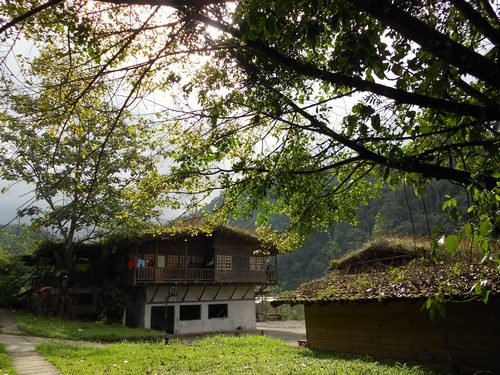
The next morning I went to Rancho Margot, near El Castillo, for the last night of that trip. In 2004 its owner, Juan Sostheim, a former fast-food executive who had franchised Burger King across Europe, bought 400 acres of overgrazed cow pasture on the edge of the rainforest and Lake Arenal. By the time I walked out of reception, it was a ranch and lodge that grew its own food, made its own soap, ran on its own river and had roofs with plants growing on top. Someone had already built my idea, and more.
They had a volunteer program: five or six hours of work a day in exchange for housing and food, like a living school. The best way to learn to build something like this, I figured, was to work for someone already on the path.

Day one
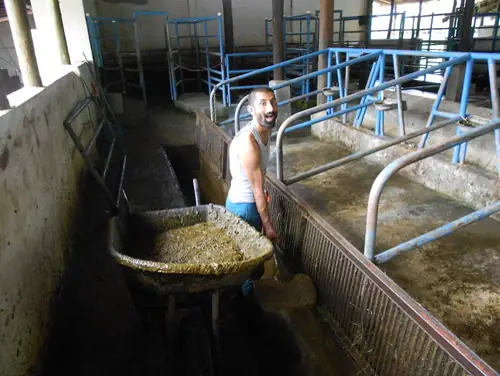
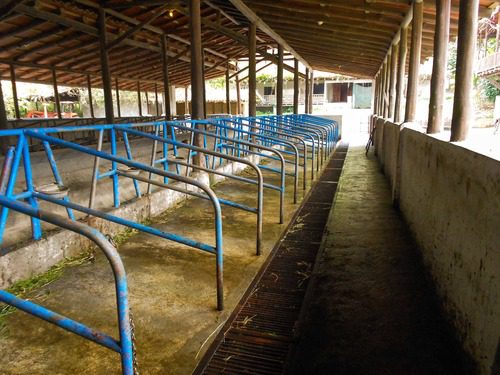
I started on 27 February 2013, in black leather boots I’d bought for the job. The volunteer coordinator laughed and pointed me to a pair of rubber ones a former volunteer had left behind. I spent the morning with Beto, who showed me how to shovel the cow manure out of the stalls, where it goes when the wheelbarrow is full, and how to hose the floor down after. The first loads took me twice as long as they took him, and a few times I slipped and fell in. The dirtier I got, the less I cared if I got more dirty. It was gross, but it felt liberating.
A volunteer from South Africa had a better method: don’t clean stall by stall, pull everything into a few big piles and shovel those. Fuller shovel, fewer trips. Batch processing, with manure. It worked. After lunch with the farm workers I turned compost that had been breaking down for months and was still hot enough to steam every time we opened a mound. Then I followed Francisco up the river that powers the ranch’s own hydroelectric plant, clearing the grates that keep leaves out of the turbines. The whole place runs off the grid on that river.
Cow manure into gold
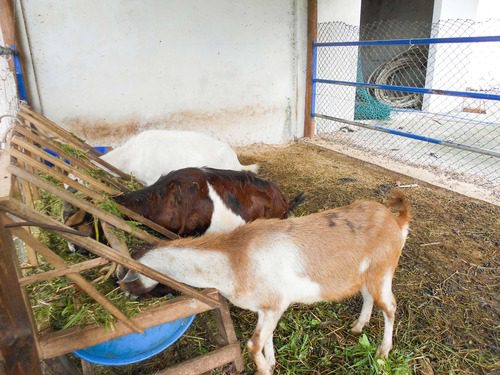
Most days after that: yoga, the corrals, the goats, compost, the huerta, the vegetable garden, where Abilio showed me exactly how to water the greenhouse tomatoes, food I’d helped grow, a walk in the rainforest and a swim in the river. Abilio made a point of putting something into the ground every day and taking something out, to keep the circle going. Cow shit is turned into gold here: the manure became compost, the compost’s heat warmed the water for the guest showers and then fed the gardens, the gardens fed the kitchen, and the kitchen fed us.
A French volunteer named Fred was the first person to say the word to me. I’d been describing what I wanted to build, and he said, more or less, you mean permaculture? There was a word for this. People already did it.
I also worked with Juan on accounting projects, and between shifts I built the ranch an Excel farm-management system. I’m so happy I studied accounting and finance. It felt really good to make sense of the numbers and see how they shape operations and decisions, on a farm instead of in a bank.
What it changed
This is where I started seeing a farm, a forest and a community as one system: every output somebody else’s input, nothing wasted. It’s the first idea I’d go on to build with my own hands, and I’ve been working on it ever since. In the spring I headed north to Nicaragua to learn more.
What I did
- Wrote down a sustainable tourism ecosystem on 21 December 2012, then went to work for the ranch that had already built it
- Mucked out the cattle stalls, and switched to batch piles the day a South African volunteer showed me it halved the trips
- Turned compost that was still hot enough to steam, the same heat that warmed the guest showers before the compost fed the gardens
- Cleared the intake grates on the river that powers the ranch’s own hydroelectric plant
- Watered and worked the greenhouse and vegetable garden with Abilio
- Worked with the owner, Juan Sostheim, on accounting projects, and built the ranch an Excel farm-management system between shifts
Deliverables
- An Excel farm-management system for the ranch
- Accounting project work for the owner
- Field notes and photos on the blog, from my first day on
Skills
- Composting and soil fertility
- Daily livestock and garden work on a working farm
- Off-grid systems: micro-hydro and compost heat
- Farm bookkeeping and management spreadsheets
- Reading a farm as one system of inputs and outputs
- Spanish on the job

What I learned
On a good farm, every output is somebody else’s input. That’s the pattern I’ve tried to build into every business since.
Related work

Project Bona Fide
Volunteer
An off-grid permaculture farm on Ometepe Island, Nicaragua, in 2013: one pair of shorts, digging and hauling water, and the first chocolate I ever made.
Ometepe, Nicaragua, 2013

Clear Springs Sanctuary
Apprentice, then planner
A Permaculture Design Certificate at Geoff Lawton’s Zaytuna Farm, then the business plan and financial model for a retreat center in New South Wales.
New South Wales, Australia, 2013
The Simple Good
Co-founder
The Simple Good, my first project after PwC: a crowd-sourced photo blog of small good things every culture shares. My co-founder still carries it on.
Chicago, 2011 to 2012