AIESEC
My Illinois years: teaching in Kibera, Nairobi, running AIESEC’s exchanges, and sending more than 50 students abroad on internships.
At a glance
- Role
- Executive board, in charge of exchanges
- When
- 2006 to 2009
- Where
- University of Illinois; Nairobi, Kenya; Muscat, Oman
- Scope
- Internships abroad for Illinois students, and my own in Kenya and Oman

Results
- 50+Illinois students sent abroad on internships while I ran exchanges
- 5 to 15Exchanges in a year, tripled
- 80Students I taught maths and business studies in Nairobi, 2007
- 1 of 40Picked for the Business Honors Program, from about 3,500
In June 2007, less than 12 hours after I landed in Nairobi, a deputy principal told me I couldn’t teach in his school because I wasn’t a teacher. By the end of that summer I was teaching in Kibera, had built the accounting system for a home for street boys, and didn’t want to leave.
The internship that didn’t exist
I was studying finance and accountancy at the University of Illinois, in the Business Honors Program, one of 40 students picked from about 3,500. After my first year I took an AIESEC internship in Kenya with ASK, a volunteer AIDS-awareness program. I knew I’d probably spend my life in business, so I picked something I’d never get to do otherwise.
On my first morning I caught a matatu across Nairobi to Jamhuri High School and waited two hours to see the deputy principal. He said I could run ASK after school as an extracurricular, and nothing more. The work I’d flown in for mostly wasn’t there. I learned very quickly that I had to be a lot more patient and open to inefficiency.
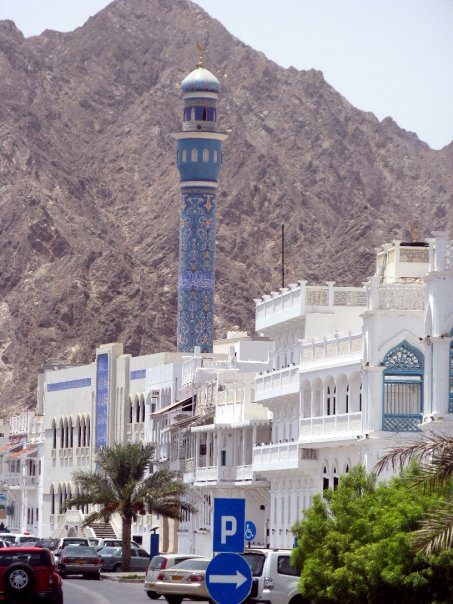
Form 3, in Kibera
So I went looking. An NGO called The Humanist Centre walked me through Kibera, one of the biggest informal settlements in Africa. At Raila Educational Services, a community school that was badly short of teachers, the principal told me I could start right away. I taught probability in the maths class and the fundamentals of accounting in the business class, to Form 3, the Kenyan equivalent of high school juniors.
Most of the students couldn’t afford books, so I wrote everything on the board and spoke slowly. I stuttered more than usual, and plenty of them found that funny. They were used to copying down whatever the teacher said, so I changed how the class ran: half of it I taught, and half of it they worked problems in small groups while I walked the room, then each group explained its thinking back to me. By exams the other teachers told me the students wouldn’t stop talking about the class. When I missed one day to climb Mt. Kenya, they thought I’d gone for good.
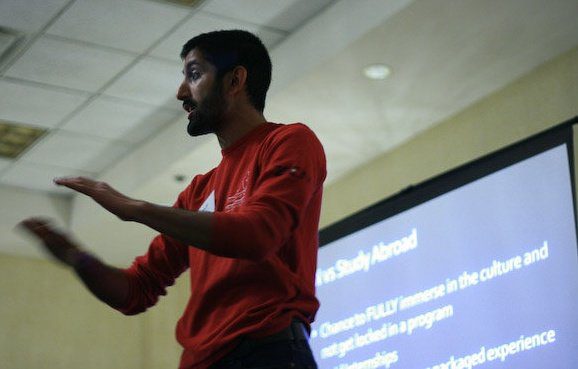
A spreadsheet for Stars for Jesus
Through AIESEC I also found Stars for Jesus, a home in Marurui, on the edge of Nairobi, for boys aged 11 to 18 taken off the streets. I expected to do counseling. Instead I found no records at all: nothing on money coming in or going out, nothing on which boys were there or how they were doing.
I sat down with their paper books and built a set of linked Excel templates, organized by month and day, with summary formulas that did the math for them. The power cut out every time I finished a key part, right as the cursor reached Save, so I learned to save constantly. Then I taught the pastors who ran the home to use it: punch in the numbers and the sheets do the rest. It wasn’t the last accounting system I’d build for someone else.
After school I ran ASK at Jamhuri with another AIESEC intern from Uganda: human development, gender roles, stereotypes and how AIDS spreads. We argued about most of it before every class, which made the classes better.
Mt. Kenya, in running shoes
The first weekend of July I climbed Mt. Kenya with a group of 14. On the final morning the rocks were sheeted in ice under a few inches of snow, and the guide turned the group back. I kept going, in running shoes meant for an indoor track, and stood on the peak alone at sunrise. Standing up there all alone was quite humbling.
By the end of the summer, strangers in Nairobi spoke to me in Swahili. I wrote the whole summer up a few weeks later, from a semester in Singapore. It’s on this site, word for word.
Fifty students onto planes
Back at Illinois I joined AIESEC’s executive board and ran exchanges: finding internships abroad and getting students onto planes. Exchanges went from 5 in a year to 15, and more than 50 Illinois students went abroad while I was there. I spoke at AIESEC conferences around the United States.
I kept going too. In the summer of 2008 I interned with PwC in Muscat, Oman, interviewing executives about how work really moved through their companies and turning it into risk assessments and heat maps for internal audit. There was a semester in Singapore, a Business Honors trip to Brazil and a study abroad in Turkey. An agribusiness course took me to Europe to follow a food supply chain, and I picked cacao. Who would have thought. In my last semester I led a team in the C40 Cities business plan competition in Seoul and built a market and financial model for a green-technology client through Illinois Business Consulting.
I graduated in 2009 with degrees in finance and accountancy and a certificate in international business. The bigger thing I took away: there were more truths out there than the ones I’d been handed, and I started asking what my work, and my life, were for.
What I did
- Restructured AIESEC Illinois’s exchange program from the executive board and tripled it, from 5 exchanges a year to 15
- Got more than 50 Illinois students onto planes for internships abroad, and managed a $5,000 scholarship contract with the College of Business that pushed more of them to go
- Walked into a Nairobi home for street boys that kept no records at all, built it a linked Excel accounting system, and trained the pastors to run it
- Taught probability and accounting to Form 3 in Kibera with no textbooks: half the class I taught, half the students worked problems in groups and explained them back
- Interned with PwC in Muscat, interviewing executives, drawing their process flows and turning them into risk assessments and heat maps for internal audit
- Led a team in the C40 Cities business plan competition in Seoul and pitched our climate plan to a panel of venture capitalists, executives and academics
- Built a market and financial model for a green-technology company through Illinois Business Consulting
Deliverables
- A restructured exchange program for AIESEC Illinois: 15 exchanges a year, up from 5
- A linked Excel accounting and record-keeping system for Stars for Jesus, Nairobi, plus marketing materials for its fundraising
- Probability and accounting lessons for Form 3, Raila Educational Services, Kibera
- Risk assessments and heat maps for PwC Muscat’s internal audit work
- A climate business plan for the C40 Cities competition, Seoul, and a financial model for a green-tech client
- Kenya, 2007: the whole summer, written up and published on this site
Skills
- Building accounting systems for organizations with no records
- Teaching without textbooks, in a second culture
- Growing a volunteer-run program and its numbers
- Process interviews and risk mapping for internal audit
- Pitching a business plan to investors and executives
- Public speaking, with a stutter


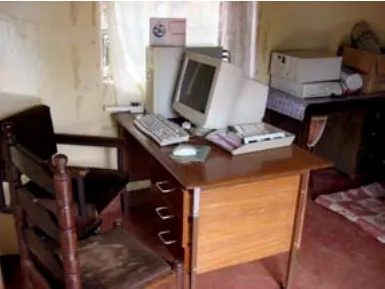

What I learned
I learned very quickly that I had to be a lot more patient and open to inefficiency. I wrote that in Nairobi in 2007, and it has held on every job since.
Related work

PwC
Experienced Associate, Consumer Finance Group
Two years in PwC’s Consumer Finance Group in Chicago, consulting to banks and the government through the financial crisis, and why I left.
Chicago, 2009 to 2011

The Simple Good
Co-founder
The Simple Good, my first project after PwC: a crowd-sourced photo blog of small good things every culture shares. My co-founder still carries it on.
Chicago, 2011 to 2012