Oro Chocolate & Coffee
Bean-to-bar chocolate made at our own factory in Nicaragua, and a café, roastery and chocolate line in a Wicker Park shoe store I rebuilt.
At a glance
- Role
- Founder; designer and builder of the Chicago shop
- When
- 2019 to now; Chicago since November 2023
- Where
- San Juan del Sur, Nicaragua, and 1553 N Milwaukee Ave, Chicago
- Team
- Karina and Jesús in Nicaragua, and the Oro team in Chicago
- Scope
- Product, recipes, factory, packaging, sourcing, and a café, roastery and chocolate line

Results
- Nov 2023Oro Chocolate & Coffee opens in Wicker Park
- ~5,000 sq ftCafé, chocolate line and roastery, designed and built
- 1,000+Farming families behind the cacao we use
- 1M+Trees planted by Ingemann’s agroforestry program, the source of our cacao
I wasn’t really a chocolate person. I don’t really have a sweet tooth. Then I started spending time in the forest with cacao farmers and saw the tree: red and yellow pods growing straight out of the trunk like something from another planet, with fruit that tastes nothing like chocolate. Ingemann’s Nicaraguan cacao has won Cacao of Excellence three times, and almost nobody outside the chocolate world knew. It felt like finding a secret.
A product, regenerative to the core
By 2018 I knew I needed a product business, something I could make in Nicaragua and export, that fit everything I believed. Chocolate does. Most of Nicaragua’s cacao comes from old heirloom varieties grown by small farmers. Grown in agroforestry, under shade trees, cacao gives a farm on the forest’s edge a reason to keep the forest, and every bar sold creates demand for that kind of farming. Even if you don’t care about regeneration, your purchase creates demand for this kind of agroforestry.
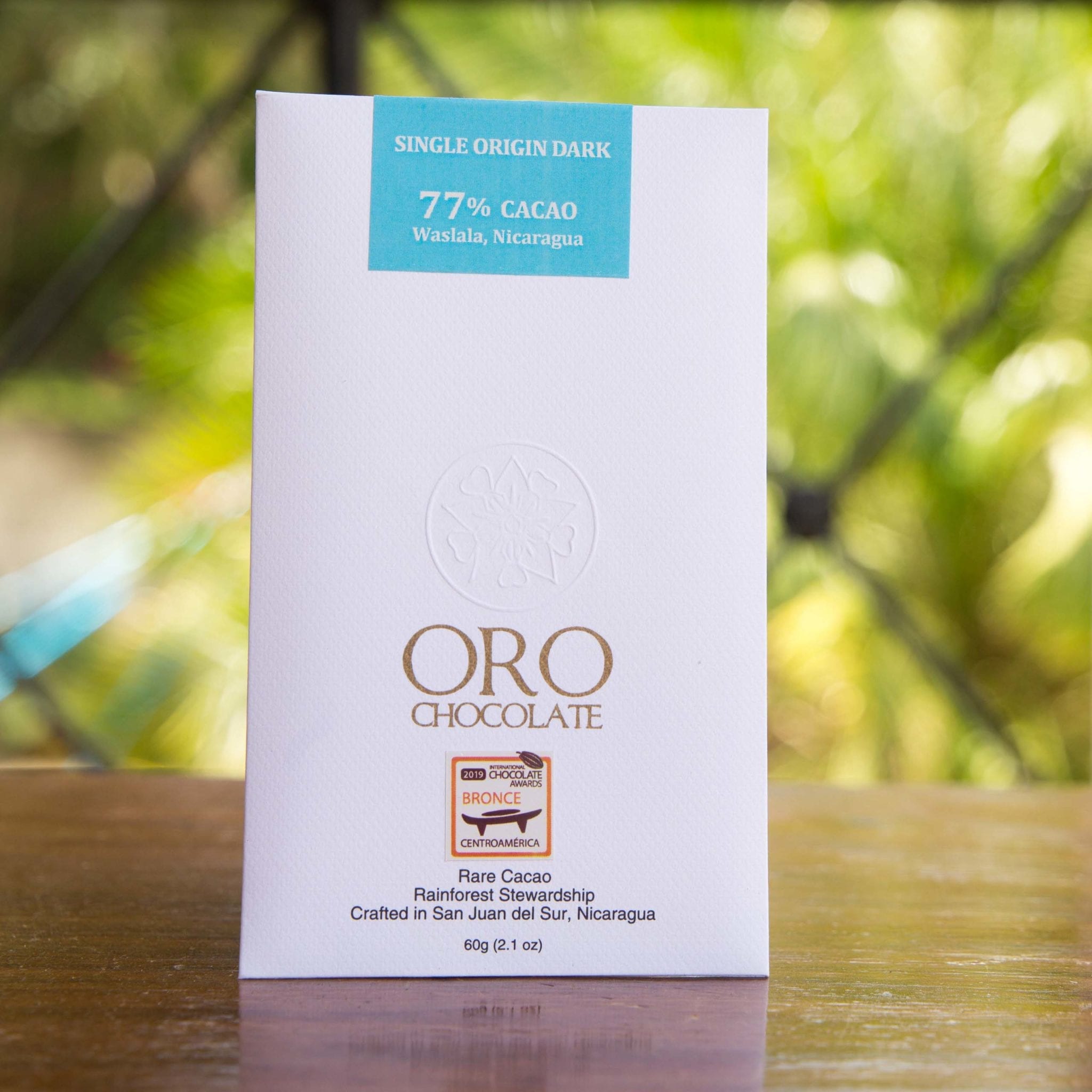
In 2019 we set up production in the kitchen of El Pacífico. I designed the molds and the packaging, and we started selling Oro at specialty shops and cafés across Nicaragua. At first I was a purist: two ingredients, cacao and sugar.
A field test and a Hershey’s bar
The reception was good enough that we rented a booth at Chocoa in Amsterdam. On 15 February 2020, at the airport in Liberia, Costa Rica, a security officer stopped us. What drugs do you have? Chocolate, we’re going to the chocolate fair. A field drug test said one of my bars was marijuana. I begged them to test a Hershey’s bar from the airport shop. It turned positive too. Then they ate it.
I was wrongfully arrested, and spent three and a half months under house arrest above a mechanic’s garage, doing yoga and breathwork and keeping the businesses alive by phone as the pandemic closed the borders, until a lab test cleared the chocolate. At the end of May, with the land borders closed, we chartered a plane: the only way back to Nicaragua. Then I went deeper into chocolate.

I became a scientist
Chocolate was growing during the pandemic, so I committed. I taught myself in earnest: I read Dandelion Chocolate’s book, watched Mānoa Chocolate’s Craft Chocolate TV, and ran batch after batch with Jesús, from our team in Nicaragua, testing them on friends and staff with surveys. It’s measurements and mixing and temperatures and pressure. Tempering is the most finicky step of all: temperature, humidity and the right crystal formation.
I switched our cacao to Ingemann, which ferments and dries cacao from more than 1,000 farming families. I chose two of Ingemann’s varieties: O’Payo, with notes of kiwi, pineapple and passion fruit, and Tuma, strong cocoa and nuts, the chocolate everyone knows. And the tests changed my mind about purity: people loved added cocoa butter, even when they didn’t know what it was. It’s more velvety, and it melts in your mouth, not in your hands. So we made it, and priced it so people in Nicaragua could afford it.
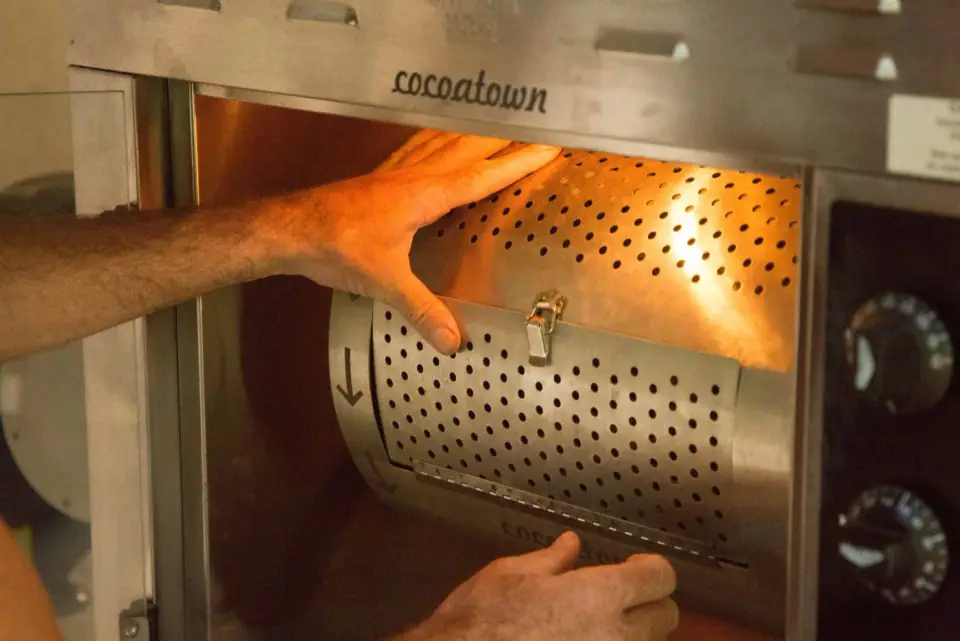
I taught Karina and Jesús to make chocolate, and they’re still with us. Our factory in San Juan del Sur roasts, winnows, grinds and conches, close to where the cacao grows, so more of the value stays in Nicaragua.

A shoe store into a chocolate shop
After more than a decade abroad I wanted to be closer to my family, and to show Nicaragua to the place I came from. Nature runs on pollinators that carry things from here to there. Now that I could export, I could be one.
In 2021 I bought a former shoe store at 1553 N Milwaukee Ave in Wicker Park and hired a contractor to build what I’d designed. I ended up as my own general contractor, not by choice, drawing on every build in Nicaragua. Two years of design and construction later, in November 2023, Oro Chocolate & Coffee opened.
It’s about 5,000 square feet, plus the basement. You walk in past the chocolate factory and the roastery, both behind glass and facing the street, because I wanted people to see exactly how it’s made. The melting, tempering and dosing line takes chocolate made in Nicaragua and turns it into bars, bonbons and drinking chocolate. An Ashe fluid-bed roaster does the coffee, and a gold-plated La Marzocco pulls the shots. MasayaCo made the counters, tables, shelves and floors from Nicaraguan teak, the seating is Nicaraguan bamboo, and an undulating teak sculpture hangs from the ceiling: an ode to water, a prayer to protect the water in the forest where the cacao and coffee grow. Past the bar there’s a long teak communal table, and the Nicaragua Room, with handmade rocking chairs.
Every step
The cacao is fermented and dried in Tipitapa by Ingemann, made into chocolate at our own factory in San Juan del Sur, and finished in Wicker Park. Ingemann’s agroforestry program has planted more than a million trees with cacao farmers, including on the edge of the Bosawás Biosphere Reserve. The coffee comes the same way, crop to cup, from Reserva Los Nogales, the farm in the mountains of Peñas Blancas where I’m a partner. When we opened, our signature drink, the Oro, was a golden milk mocha: milk chocolate with turmeric, ginger, cardamom, black pepper and cinnamon.
Since 2024 I’ve also been a partner and CFO at Ingemann. At the farm gate, Ingemann measures the brix, pH and temperature of every bag of wet cacao before it goes into its own wooden fermentation boxes, and every lot can be traced back to the farms it came from. That’s where a bar of Oro starts, weeks before anyone tastes it.


 20212026
 20232026
What I did
- Started Oro in 2019 in El Pacífico’s kitchen, designed the molds and packaging, and got the bars into specialty shops and cafés across Nicaragua
- Taught myself chocolate making from Dandelion Chocolate’s book and Craft Chocolate TV, then ran batch after batch with Jesús, tested on friends and staff with surveys
- Switched our cacao to Ingemann, chose two of its varieties, O’Payo and Tuma, added cocoa butter when the tests said people loved it, and priced the bars so people in Nicaragua could afford them
- Taught Karina and Jesús to make chocolate; both are still with us
- Kept the businesses alive by phone through three and a half months of house arrest, after an airport field test called my chocolate marijuana and a lab cleared it
- Bought a former shoe store at 1553 N Milwaukee Ave in 2021, designed a café, roastery and chocolate line of about 5,000 square feet, plus the basement, and ended up as my own general contractor (not by choice)
- Opened Oro Chocolate & Coffee in November 2023, with the chocolate line and the roastery behind glass, facing the street
Deliverables
- Oro bars: recipes, molds and packaging
- The Oro factory in San Juan del Sur, which roasts, winnows, grinds and conches
- A two-country supply line: chocolate made in Nicaragua, shipped in 5 kg blocks and finished in Wicker Park
- Oro Chocolate & Coffee, 1553 N Milwaukee Ave, Chicago
- A glass-walled melting, tempering and dosing line, and an Ashe fluid-bed roaster, facing the street
- Interiors in Nicaraguan teak and bamboo, including the undulating teak ceiling sculpture and the Nicaragua Room
Skills
- Product development and recipe testing
- Small-batch chocolate manufacturing
- Running a supply chain from origin to shelf
- Café and retail design
- General contracting a commercial build-out
- Packaging and brand design


I needed to figure out how I could build a bridge between the hippie world and the business world.
What I learned
I wasn’t a chocolate person, and I don’t have a sweet tooth. I became a scientist anyway: batch after batch, tested on the people who would eat it.
Related work

El Pacífico
Designer and builder
A garden hotel in La Talanguera, rewired, replumbed and redesigned room by room. Oro’s chocolate factory started in its kitchen and is still there.
La Talanguera, San Juan del Sur, 2017 to now

Casa Oro Group
Founder and CEO
Five guesthouses, three places to eat, tours, shuttles, chocolate and a farm in San Juan del Sur, built since 2015 to give back more than it takes.
San Juan del Sur, 2015 to now
Rancho Regeneración
Developer and designer
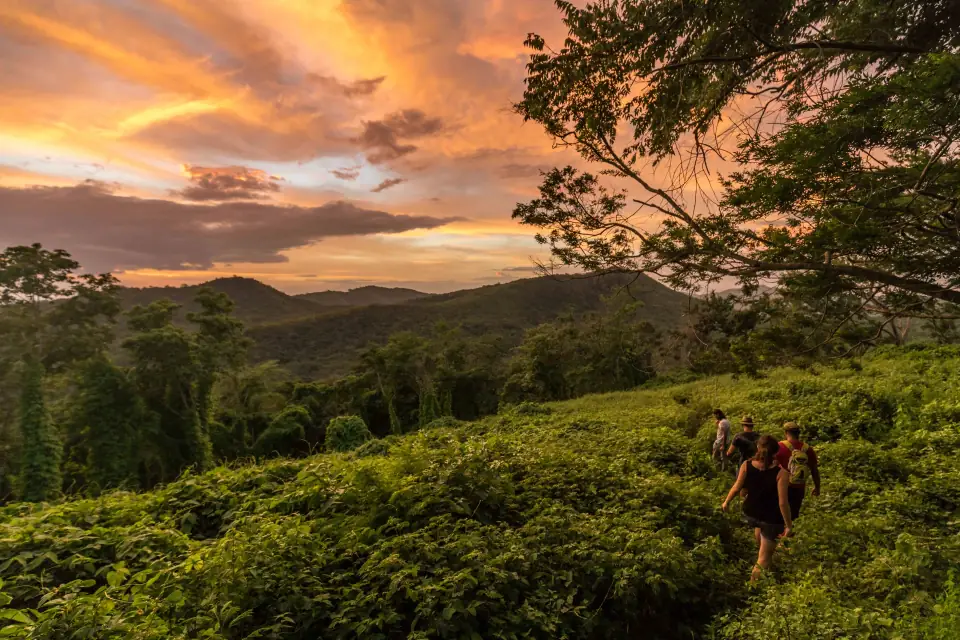
80 acres in El Carrizal, south of San Juan del Sur, now a registered private wildlife reserve: water, roads, compost, food, trees and an earthbag dome.
El Carrizal, San Juan del Sur, 2015 to now