Casa Oro Group
Five guesthouses, three places to eat, tours, shuttles, chocolate and a farm in San Juan del Sur, built since 2015 to give back more than it takes.
At a glance
- Role
- Founder and CEO
- When
- 2015 to now
- Where
- San Juan del Sur, Nicaragua
- Team
- 50+ local employees today; at peak about 60 full time and 40 in construction
- Scope
- Five guesthouses, three places to eat, tours, shuttles, a farm and a chocolate factory

Results
- 5Guesthouses redesigned and rebuilt, room for about 150 guests
- 50+Local employees today
- 60 + 40Full-time staff and construction crew at the peak
- ~90%Average occupancy across the houses at our peak, as I told the Chicago Reader
Tourism usually takes more from a place than it gives back. In 2015 I set out to build guesthouses, kitchens and a farm in San Juan del Sur that did the opposite. Casa Oro Group is what that looks like more than ten years in.
What’s in it
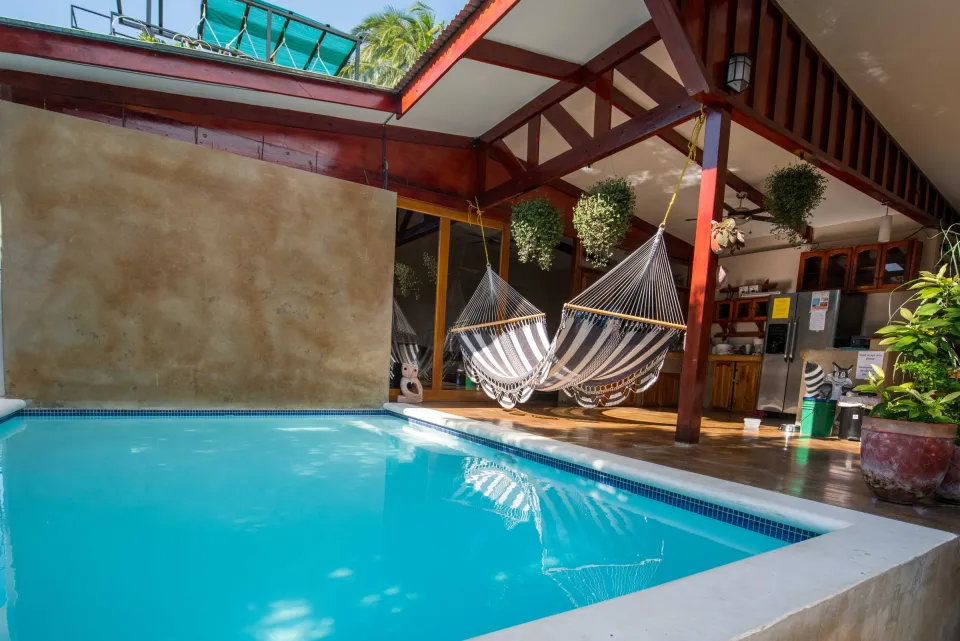
Five houses: Casa Oro, Nuestra Casa, El Pacífico, Casa Andalucía and Casa Ruth, from a backpacker hostel to a hillside retreat, room for roughly 150 guests at once, all walkable in town. Three places to eat: Café Oro, Hijo de Pita and the restaurant at El Pacífico. Surf lessons and rentals, shuttles to the beaches and the airport, the sea turtle tour, and the Oro chocolate factory tour on Saturdays. An artist residency and a volunteer program. Rancho Regeneración, the farm. And Oro Chocolate, which was born inside it.
It runs as Casa Oro Internacional S.A., with more than 50 local employees, all of it in Spanish.

An ecosystem, on purpose
When I pitched the first purchase I made only the financial case. The case I didn’t make was the one I actually believed: design inspired by nature, businesses as ecosystems, each one feeding the next. The more people eat our food or take our shuttles to the beach, the more our place gets known and the more people come to stay with us. Then the more trees we can plant, and the more demand that creates for the kind of farming we do. Then someone else says, those guys are making money doing that, maybe we should too.
It worked well enough that my partners said, this is good, let’s do more of this. We reinvested what we made into the next property, and the next. Between 2016 and 2017 we added Nuestra Casa, Casa Andalucía, El Pacífico and Casa Ruth, and I designed and rebuilt every one. At our peak I had about 60 people working full time and 40 more on the construction crew, and at our peak, as I told the Chicago Reader, the houses averaged about 90 percent occupancy.

A more dignified place to work
As founder and CEO I owned the vision, the strategy, the execution and the results, down to the details. I learned fast that the biggest lever is the people. Everything is a people problem.
So I studied how workplaces in Nicaragua usually run and designed a more dignified one: people in every position are respected, everyone’s opinion counts, and yes, everyone hugs. I started hugging everyone, and the town started calling me Don Muffa. I asked them not to, so they called me jefe. We built a flat structure, systems for the routine work, and values the team actually uses. Over time I designed myself out of the day-to-day.

From paper to numbers we trust
When I arrived, the business ran on paper. I moved operations to electronic systems with paper controls, which gave us real reporting and metrics, made the numbers transparent, and let us make strategic decisions on facts. Every team member is cross-trained and expected to take initiative. That’s how we kept operating, and kept taking care of the team, through the pandemic.
In October 2026 we launched a new casaorogroup.com.
The best part
My favorite part is watching someone on the team courageously do something they never thought they could. Karina learned to make chocolate with me, batch by batch; now she leads the factory tour. Local crews built what I drew, and a team I trained learned to run it without me. That’s the proof.
What I did
- Grew the group with my partners from one hostel in 2015 to five guesthouses, three places to eat, tours, shuttles, a farm and a chocolate factory
- Reinvested what the houses earned into the next property, and designed and rebuilt every one: Nuestra Casa, Casa Andalucía, El Pacífico and Casa Ruth in 2016 and 2017
- Hired, coached and managed more than 60 people across eight business units at our peak, plus 40 on the construction crew
- Designed a flatter, more dignified workplace for a Nicaraguan team, with systems for the routine work and values people use, then designed myself out of the day-to-day
- Moved operations from paper to electronic systems with paper controls, so we had real reporting and made decisions on facts
- Cross-trained every team member, which is how we kept operating, and kept taking care of the team, through the pandemic
- Designed and built the group’s first SEO-optimized website with an automated booking engine, then directed the new casaorogroup.com in 2026
Deliverables
- Five operating guesthouses, room for about 150 guests
- Café Oro (designed twice), Hijo de Pita and the El Pacífico restaurant
- Surf lessons and rentals, beach and airport shuttles, the sea turtle tour and the chocolate factory tour
- An artist residency and a volunteer program
- Electronic operating and reporting systems, replacing paper
- A booking website, and the new casaorogroup.com (2026)
Skills
- Building and running a multi-property hospitality group
- Reinvesting cash flow into real estate
- Organizational design for a flat, cross-trained team
- Operating systems and reporting
- Leading a team of 50+ in Spanish
- Food, tour and transport operations

What I learned
The plan is rarely the hard part. The people who carry it are everything, and the job is to build a team that runs without you in the room.
Related work

Casa Oro
Partner and operator
San Juan del Sur’s first hostel, bought with partners in 2015, rebuilt in four months, and reopened in January 2017 with the first Café Oro.
San Juan del Sur, 2015 to now
Rancho Regeneración
Developer and designer
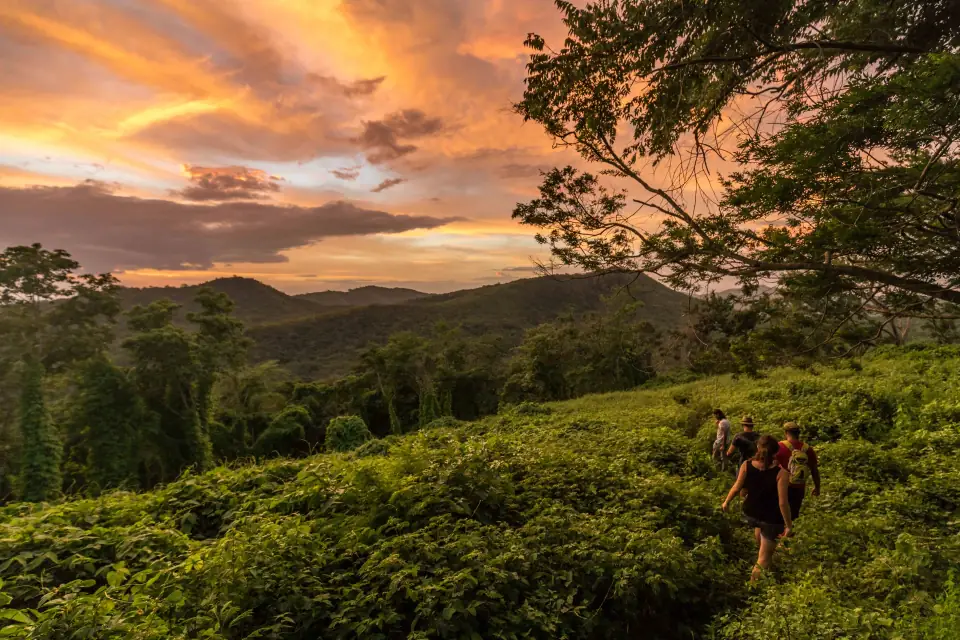
80 acres in El Carrizal, south of San Juan del Sur, now a registered private wildlife reserve: water, roads, compost, food, trees and an earthbag dome.
El Carrizal, San Juan del Sur, 2015 to now

Oro Chocolate & Coffee
Founder
Bean-to-bar chocolate made at our own factory in Nicaragua, and a café, roastery and chocolate line in a Wicker Park shoe store I rebuilt.
San Juan del Sur and Chicago, 2019 to now