Rancho Regeneración
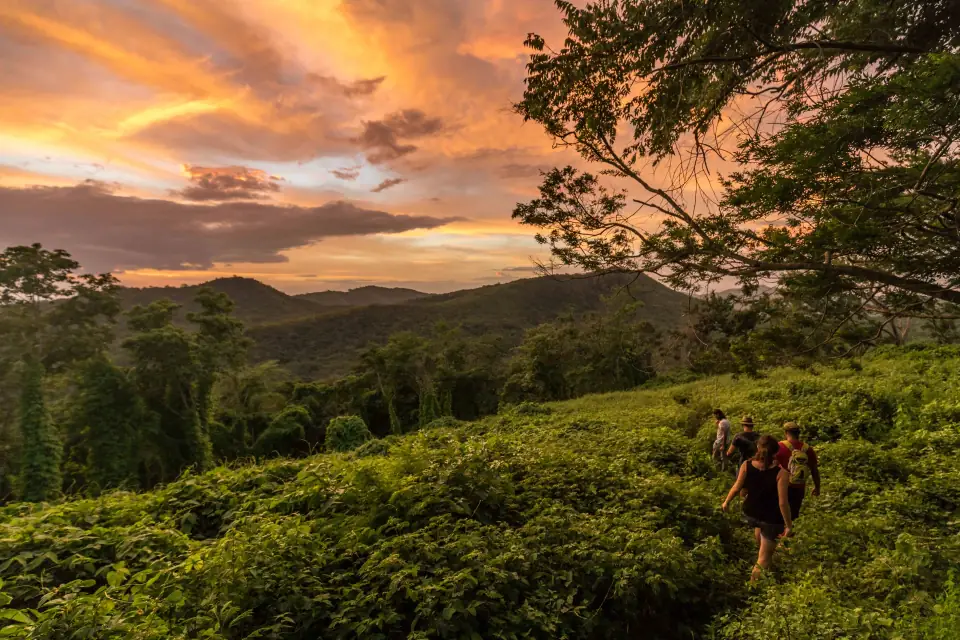
80 acres in El Carrizal, south of San Juan del Sur, now a registered private wildlife reserve: water, roads, compost, food, trees and an earthbag dome.
At a glance
- Role
- Developer and designer
- When
- 2015 to now
- Where
- El Carrizal, near Playa Hermosa, 6 km south of San Juan del Sur
- Scope
- 80 acres: water, roads, a bridge, compost, food, trees and a prototype earthbag dome
Results
- ReserveThe whole property registered with MARENA as a private wildlife reserve
- 10,000+Native trees planted
- 10,000+ lbWaste kept out of the landfill by the composting and recycling program
- 2 acresOrganic food grown for the Casa Oro restaurant
- June 2019Earthbag dome structure finished; bamboo and furniture inside by early 2020
At the airport, kissing my parents goodbye, my dad looked me in the eye: go find that piece of land, and let’s build your dream. It took a week to find it. In the spring of 2015 we signed the deal on 80 acres of raw hillside in El Carrizal, near Playa Hermosa, south of San Juan del Sur.
Círculo
I called the idea Círculo. I wanted a community as regenerative as we could make it: an eco-lodge, homes people could buy, our own food, agroforestry, buildings made from natural and recycled materials, and travelers who came to meet the place rather than consume it. Travelers, not tourists. Food, housing, economy, education and the land itself, all in one circle.
The land turned out to be bigger and cheaper than the agent first told us. From June 2015 we were building out the vision on the ground. Círculo never became one company. It became everything Casa Oro Group grew into, and the farm is where its kitchen scraps still end up.

A well, a road, a bridge
Raw land needs everything before it can grow anything. We dug a well and connected a solar-powered pump. We built the first phases of the road system, a bridge across a ravine, a storage shed and a composting area. We planted two acres of organic, chemical-free food that went straight to the restaurant at Casa Oro.
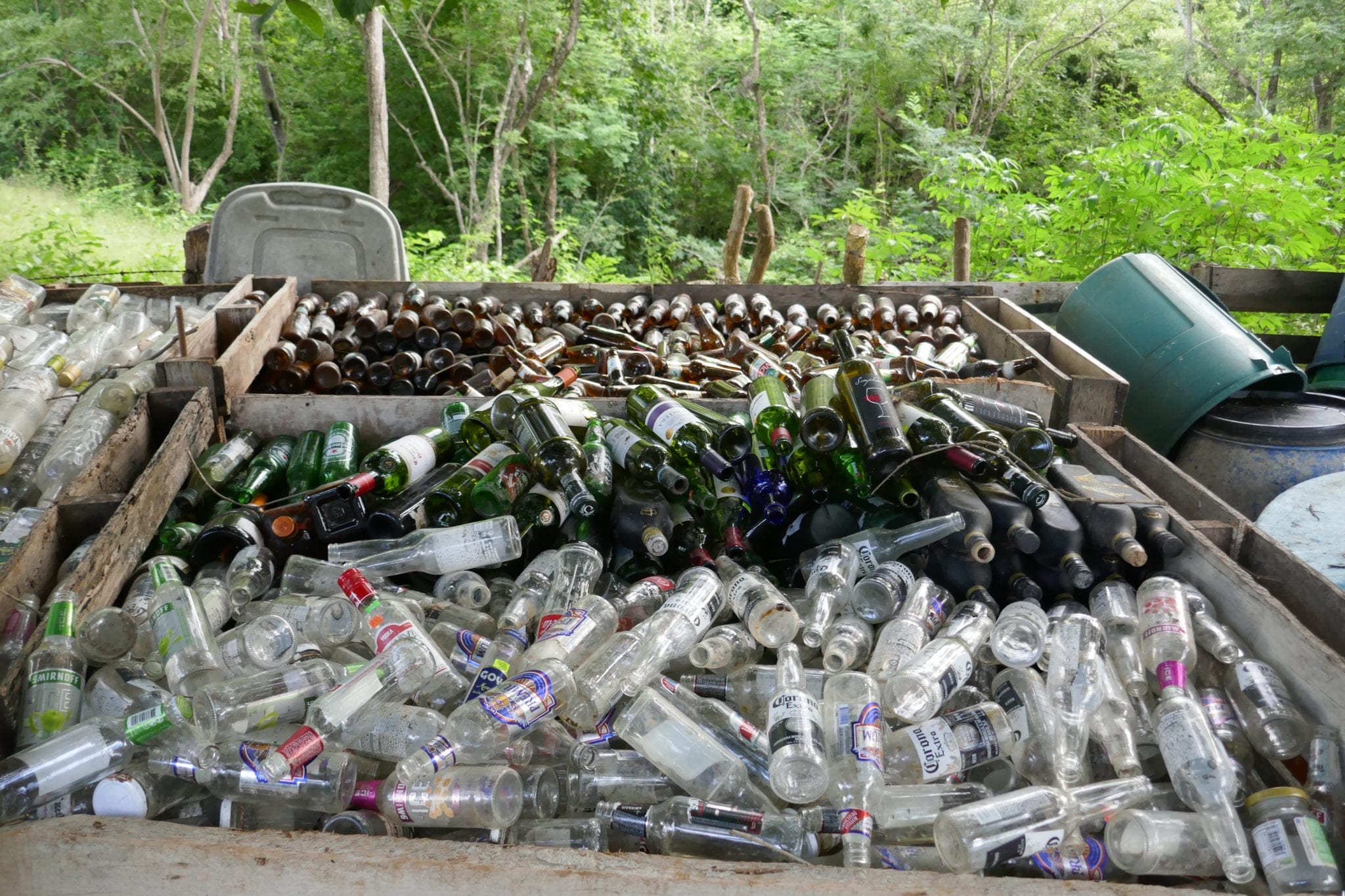
Then we started taking the town’s waste. We set up a composting and recycling center for what we hauled out of San Juan del Sur, and at the reopening of Casa Oro in January 2017 I asked a room full of neighbors to bring us their garbage: glass bottles, plastic bottles, wine corks, bottle caps, used tires and kitchen scraps. We built walls out of the glass bottles the farm collected, and before long other people in town were building with bottles too. Over those years the program kept more than 10,000 pounds out of the landfill. Today the farm takes the compost: Café Oro’s scraps go up to Rancho Regeneración, and food comes back down.
Trees, turmeric and fruit
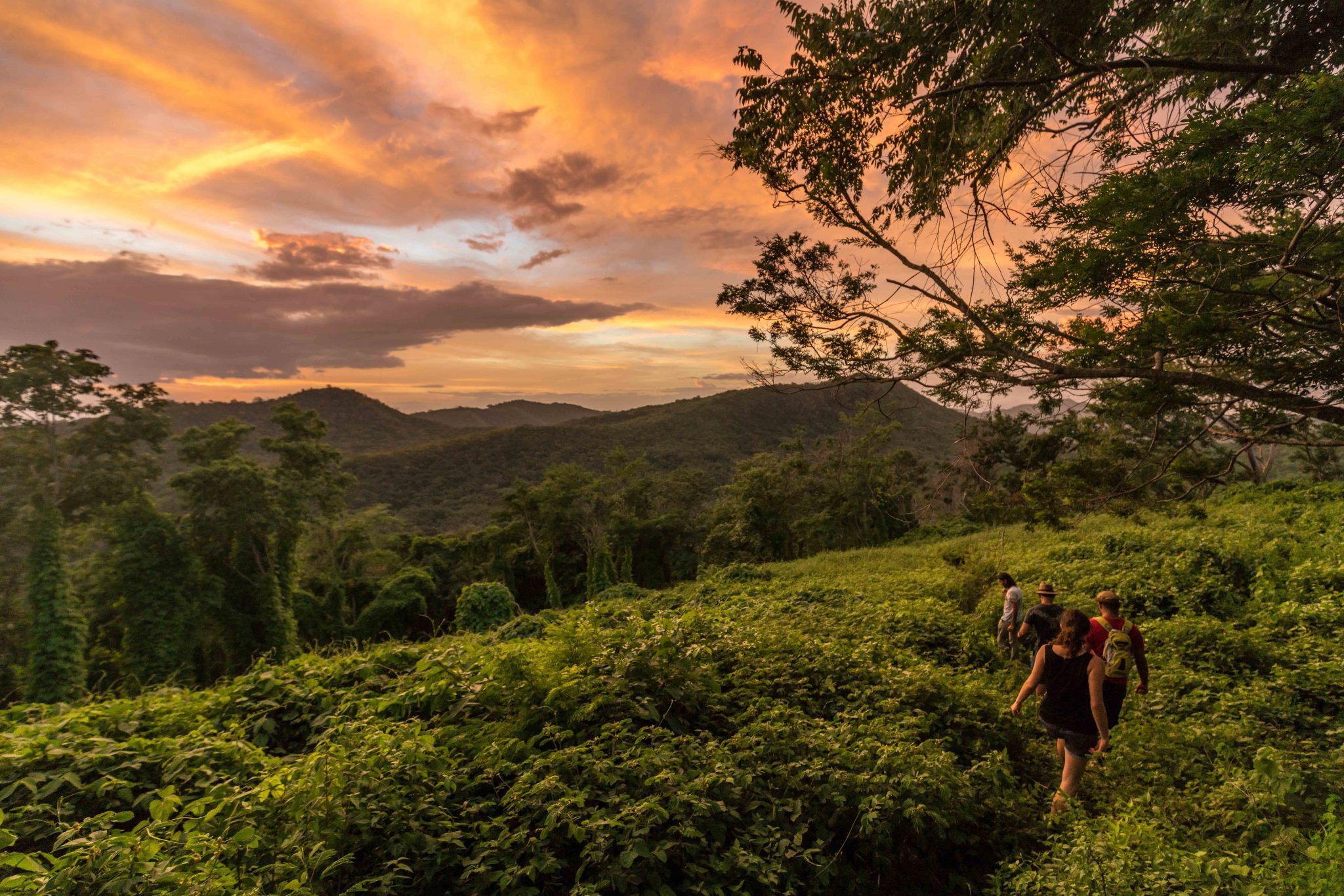
Since then: more than 10,000 native trees, a couple of thousand new ones a year, with turmeric and tropical fruit growing among them. It’s agroforestry and permaculture, food grown with the forest instead of against it. The turmeric is an experiment in doing what we do with cacao and coffee: add the value close to where it grows, so more of the work and the money stays near the farm.
The dome
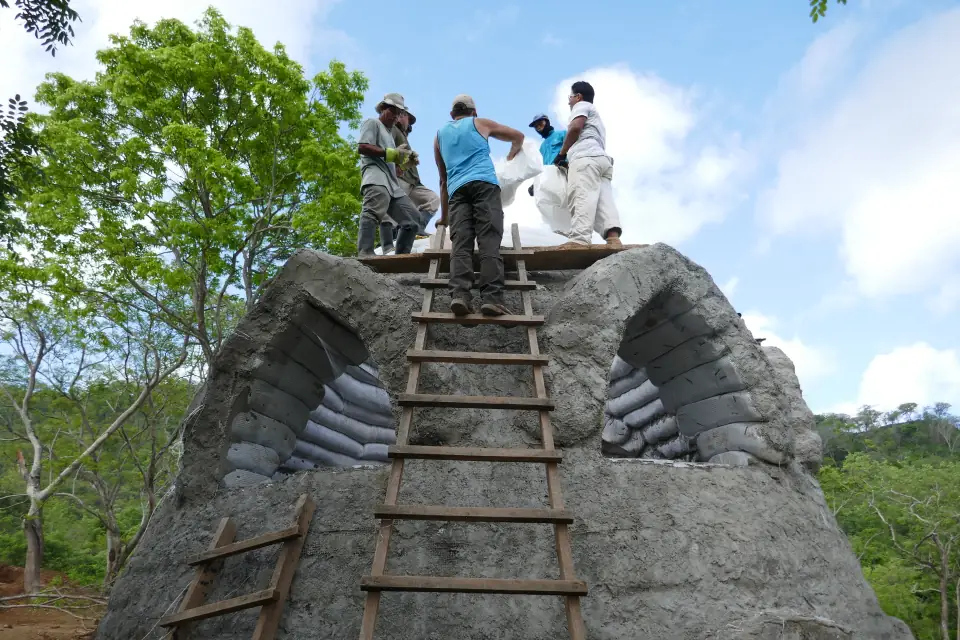
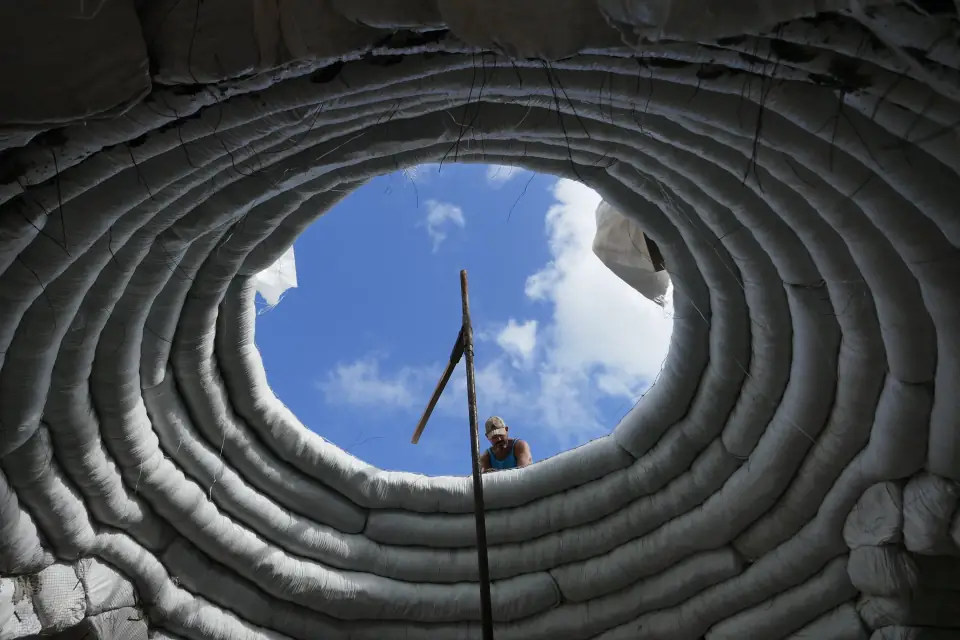
In 2018 I went back to school my way: Bamboo U at the Green School in Bali, then the Earthship Academy in Taos, New Mexico, learning to build with earth, sun and rain. I came home and built a prototype on the ridge: an earthbag dome with earthship systems inside. The structure was finished in June 2019, and the bamboo and furniture inside by early 2020.
It’s an experiment in building that gives back more than it takes. I’m watching how it holds up through the rains, and finding out which pieces belong in whatever we build next on this land.

A private wildlife reserve
The whole property is now registered with MARENA, Nicaragua’s environment ministry, as a private wildlife reserve. In 2015 it was raw hillside.
I’ll be honest about the rest. The farm I bought first has become, in my own words, a bit of a forgotten child. It’s teaching me to be more selective about what I build, and to build the next phase slowly, with the land, not over it.

What I did
- Found 80 acres of raw hillside in a week and signed the deal with my partners in spring 2015
- Designed and built the first infrastructure: a well with a solar pump, the first phases of the road system, a bridge across a ravine and a storage shed
- Set up a composting and recycling center for waste hauled out of San Juan del Sur, kept more than 10,000 pounds out of the landfill, and built walls from the bottles
- Planted two acres of organic food for the Casa Oro restaurant, then more than 10,000 native trees with turmeric and tropical fruit among them
- Trained in bamboo building at the Green School in Bali and in passive solar, off-grid water and thermal mass at the Earthship Academy in Taos
- Designed and built a prototype earthbag dome with earthship systems inside; the structure was finished in June 2019
- Got the whole property registered with MARENA, Nicaragua’s environment ministry, as a private wildlife reserve
Deliverables
- A well with a solar-powered pump
- The first phases of the road system, a bridge across a ravine and a storage shed
- A composting and recycling center for the town’s waste, and bottle walls
- Two acres of organic food plots, and more than 10,000 native trees
- An earthbag dome prototype with earthship systems
- A private wildlife reserve, registered with MARENA, Nicaragua’s environment ministry
Skills
- Raw-land development: water, roads and access
- Agroforestry and permaculture planting at scale
- Natural building: earthbag, bamboo and earthship systems
- Passive solar and off-grid water design
- Waste, compost and recycling systems
- Private land conservation

What I learned
Raw land needs water, roads and patience before it grows anything. And it takes your attention whether you give it or not.
Related work

Casa Oro Group
Founder and CEO
Five guesthouses, three places to eat, tours, shuttles, chocolate and a farm in San Juan del Sur, built since 2015 to give back more than it takes.
San Juan del Sur, 2015 to now

Casa Oro
Partner and operator
San Juan del Sur’s first hostel, bought with partners in 2015, rebuilt in four months, and reopened in January 2017 with the first Café Oro.
San Juan del Sur, 2015 to now

Clear Springs Sanctuary
Apprentice, then planner
A Permaculture Design Certificate at Geoff Lawton’s Zaytuna Farm, then the business plan and financial model for a retreat center in New South Wales.
New South Wales, Australia, 2013