The Windship
After Typhoon Haiyan, three months in Leyte helping build the Windship, a typhoon shelter of tires, earth and bottles, with a village and Earthship.
At a glance
- Role
- Procurement, building, storytelling
- When
- January to spring 2014, about three months
- Where
- Batug, Dulag, Leyte, the Philippines
- Team
- The Earth Village Project, Earthship Biotecture and the people of Batug
- Scope
- A typhoon shelter, base camp, community garden, adobe workshops and a village co-op

Results
- $30kBuild budget and procurement I managed
- 200+Villagers at the first visioning session
- 70+People on the Windship build itself, by my count at the time
- 5,000+Photos and videos I shot as chief storyteller
I was in Australia when Typhoon Haiyan hit the Philippines, reported at the time as the strongest storm ever to make landfall. I booked my flight home to Chicago through Manila, without knowing a single person there. By January 2014 I was driving a packed SUV into the village of Batug, in Leyte.
Not relief
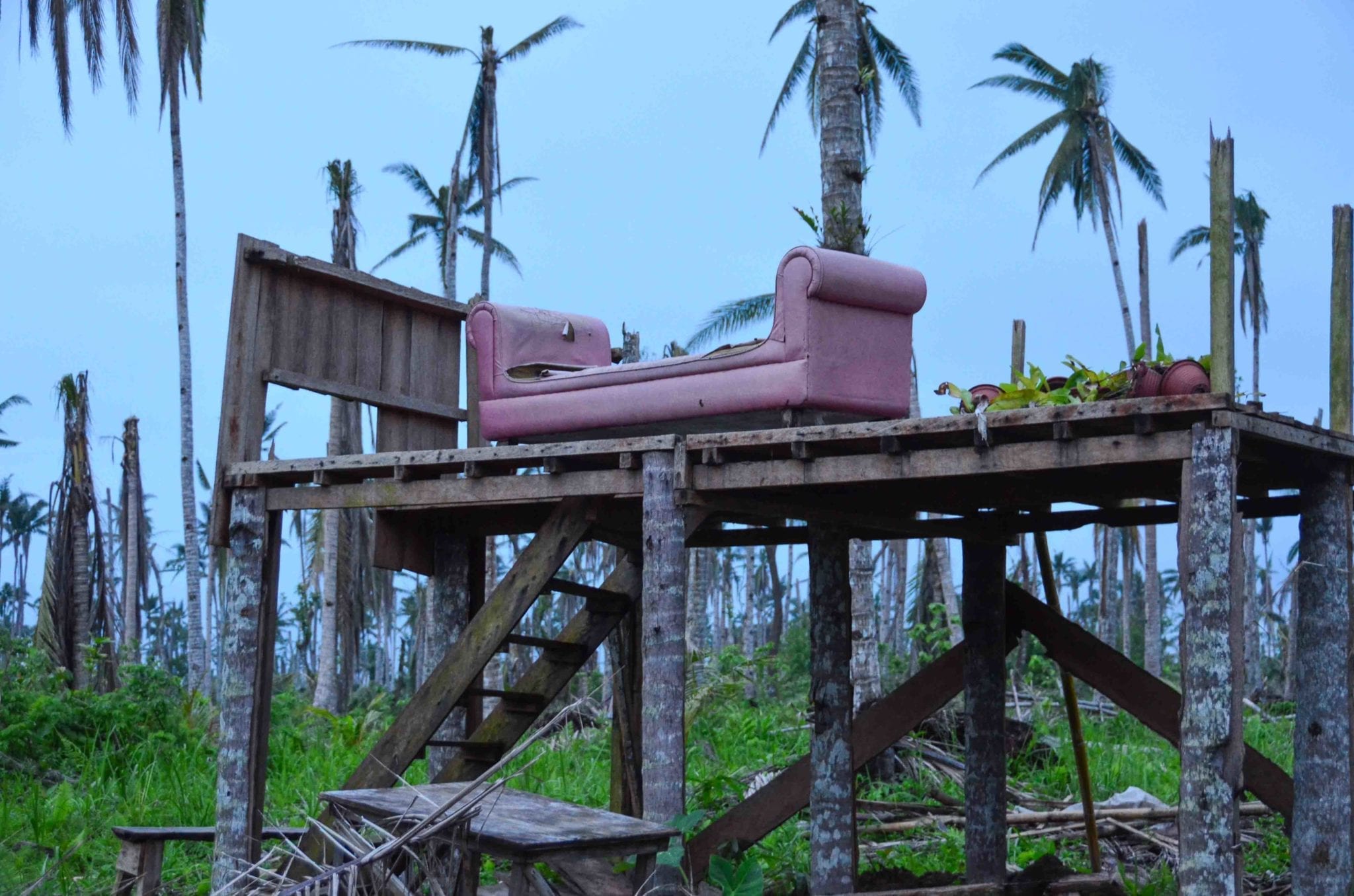
The Earth Village Project set out to rebuild Batug in the most sustainable way it could: small-scale organic farming, mud houses, composting toilets, structures from earth and trash, all built with the village rather than for it. A few people had started in December, camping in a villager’s yard and spending a month just walking with families and listening.
I arrived after New Year with the next wave of the team. In one weekend we set up base camp, ran a visioning session that more than 200 villagers came to, planted a community garden and built a mud bench. We took the word relief out of our vocabulary. There were no beneficiaries; we worked with the community and learned with them.

The Windship
Michael Reynolds of Earthship Biotecture had designed a typhoon bunker on Earthship principles, and he called it the Windship. In Tacloban, one of the few buildings left standing was the round convention center; the wind slid off its curves instead of slamming into a wall. The Windship takes the same idea: two low domes joined by an arch, on a base of tires rammed with earth, with walls of recycled bottles and concrete, finished inside with adobe mixed on site. The roofs catch rain into two cisterns, most of it is buried from the outside, and the middle holds planted beds that treat its grey and black water.
The build started on 23 February 2014 on the grounds of the Batug school. By my count at the time, the build itself drew more than 70 people from the village and around the world, and over the life of the project more than 100 volunteers came through the camp. When it was done, the kids found out it doubles as a giant musical instrument you can play with sticks and stones.

My part, and the hands
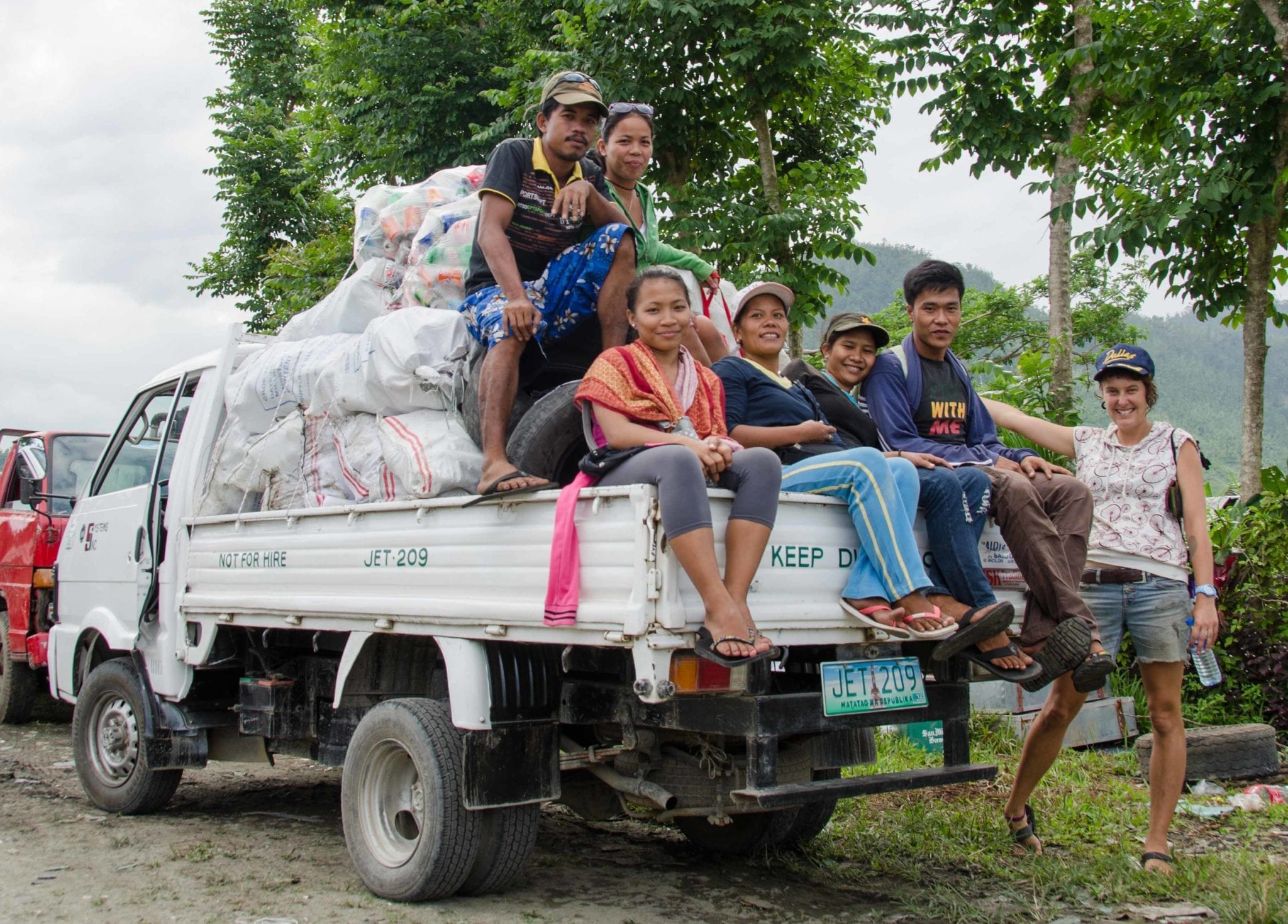
I ran procurement. In Cebu, Sabina and I drove a pickup that city councilor Nestor Archivale donated all over town on a wild goose hunt for every tool and material the build needed, and I managed a budget of about $30,000. I made welcome packets for the volunteers flying in, helped build, and kept the camp running once the build started: the composting toilets, the food waste, and the drinking water, which we hauled from the river in a bucket chain and filtered overnight. I was also the chief storyteller, and shot more than 5,000 photos and videos.
Mia ran trash drives all over Tacloban with the city’s waste crew and became known around town as the plastic woman; she also got up at 4:30 most mornings to make breakfast for everyone. Paul, Jake, Phil and Janis built the toilets, the showers and the camp. Gigi helped the village organize a co-op that fed the whole build and spun off a riverside bar and a handful of small businesses. The men of Batug dug the dirt, sand, gravel and rock by hand. Shadow workers don’t get the spotlight; they get it done.
After the build
Every week the aid groups met in the mayor’s office in Dulag. Most worked from handouts and scale. I put on my barefoot businessman shoes and argued for pilots: test small, learn, then grow. So we planned a learning village with the local 4Ps gardening collective: villagers would make mud bricks together and build a mud wall and a kitchen garden for each family in their group, and each group would teach the next. I ran adobe building workshops, worked with families on a co-op built on trust and open books, explored a livelihood in moringa, which grows wild there and sells as a superfood, and supported our local liaison in trauma and healing work.
Our aim was a system that designs us out of the picture. The Windship has since sheltered people through later typhoons. Between storms, it’s a classroom.
What I did
- Ran procurement for the Windship out of Cebu, hunting down every tool and material the build needed on a budget of about $30,000
- Worked as the go-between for the Earth Village Project and Earthship Biotecture, so the build had what Earthship’s design called for
- Helped build the shelter alongside the Earthship crew, volunteers and the people of Batug
- Kept the camp running: composting toilets, food waste, drinking water hauled by bucket chain and filtered overnight, and welcome packets for incoming volunteers
- Helped run a visioning session that drew more than 200 villagers, and plant a community garden
- Ran adobe building workshops and worked with families on a co-op built on trust and open books
- Documented the whole build as chief storyteller, in more than 5,000 photos and videos
Deliverables
- Materials and tools sourced and delivered for the Windship, a typhoon shelter designed by Earthship Biotecture
- Base camp with composting toilets, showers and filtered drinking water
- A community garden and a mud bench
- Adobe building workshops for the village
- A photo and video record of the build, 5,000+ files
Skills
- Procurement and logistics in a disaster zone
- Managing a build budget under pressure
- Natural building: tires, earth, bottles and adobe
- Community organizing and co-op design
- Documentary photography and storytelling
- Running a volunteer camp
What I learned
Aid that hands things out ends when the money does. Build with people, teach them to teach each other, and design yourself out of the picture.
Related work

Clear Springs Sanctuary
Apprentice, then planner
A Permaculture Design Certificate at Geoff Lawton’s Zaytuna Farm, then the business plan and financial model for a retreat center in New South Wales.
New South Wales, Australia, 2013

Leo Burnett
Design thinking, innovation team
Design-thinking research at Leo Burnett with its chief innovation officer: interviews at every level, a company-wide workshop, a 30-page report.
Chicago, 2014

Casa Andalucía
Designer, builder, engineer
A hillside B&B over the bay, rebuilt twice: once by choice, with bamboo and bottle walls, and once after an October 2017 storm brought the hill down.
San Juan del Sur, 2016 to now