Now
- Oro Chocolate & CoffeeFounderBean to bar, from our factory in San Juan del Sur to our shop in Wicker Park, Chicago.since 2019
- Casa Oro GroupFounderFive guesthouses, three places to eat, chocolate factory tours, shuttles and a farm in San Juan del Sur, Nicaragua.since 2015
- Reserva Los NogalesManaging partnerA rainforest reserve and regenerative coffee farm on the edge of the Bosawás Biosphere Reserve.since 2022
- IngemannPartner and CFOAward-winning fine cacao from more than 1,000 Nicaraguan farming families, grown in agroforestry, and raw wildflower honey from across Nicaragua.since 2024
- The operating systemSystems and softwareSoftware for the four companies, still being built, with a shared memory underneath. AI where it solves a real problem; the judgment stays with people.since 2026
In pursuit of regeneration.
Regeneration: leaving people, places and economies better than I found them.
Ingemann’s agroforestry program has planted more than a million trees with cacao farmers, including on the edge of the Bosawás Biosphere Reserve, the UNESCO rainforest in northern Nicaragua. Cacao grows best in shade, so the trees give a farm on the forest’s edge a reason to keep the forest. Buy the chocolate, and you’re financing the rainforest. The Ingemann team did years of that work before I joined. Now I help carry it.
In 2013 I joined the founding class of the Experience Institute, a graduate year you design yourself. Instead of a major, I chose a mission:
How might we redesign society to be more whole?My mentors told me to focus. Maybe they were right. I’m still working on it.
- How things work.
In 2011 I left a fast track at PwC to learn how the things we depend on actually work: how food gets grown, how a building stands up, how a business can give back more than it takes. Fifteen years in, I’m still taking notes.
- Design inspired by nature.
Nature has had billions of years of research and development, so I look there first. Shade trees keep cacao healthy and the forest standing. Earth walls and green roofs keep the Casa Andalucía cabins cool. A forest wastes nothing, so the town’s scraps went to the compost at Rancho Regeneración. Then I take the same patterns into how we run a business and a team.
- I see what it could be.
Show me something tired or overlooked and I start seeing what it could become. An abandoned house on a hill became Casa Ruth. A shoe store on Milwaukee Avenue became a chocolate shop. I do the same with businesses: a hostel that ran on paper got real books and real numbers, and a hotel kitchen became a chocolate factory.
- Between worlds.
Chicago and San Juan del Sur. Finance and farming. Hospitality and AI. English, Spanish, Urdu, Gujarati. Partner and CFO of a Nicaraguan cacao and honey exporter while running a shop in Chicago. And late at night, software: I’m teaching myself to build the tools our companies run on.
- I learn by doing it wrong first.
My first canoe trip zigzagged down the Río San Juan until we worked out how to steer. My first rebuild at Casa Andalucía stood until a tropical storm brought the hill down, so I rebuilt it into the hill. Most of what I know about building, hospitality and finance came the same way: wrong first, then better.
- Still standing.
A landslide. A pandemic. A wrongful arrest over my own chocolate. Any one of them could have ended it. Oro Chocolate & Coffee opened in Chicago in November 2023 anyway.
Chapters
On 21 December 2012, at a brewery on Lake Arenal in Costa Rica, I wrote down an idea: a sustainable tourism ecosystem. Grow our own food, build with natural and recycled materials, connect travelers with real people. Everything after that is me building it, and finding out it was bigger than tourism.
2006 to 2011Illinois and the worldschool, the world, then the banksStudent, then consultant
In 2007 I stood in front of a classroom in Kibera, Nairobi, teaching probability to high school juniors, with a stutter. I was studying finance and accountancy at the University of Illinois, in Business Honors. On AIESEC’s executive board I ran exchanges, and I went whenever I could: Muscat in 2008 with PwC, a semester in Singapore, a Business Honors trip to Brazil, a study abroad in Turkey. An agribusiness course took me to Europe to follow a supply chain. I picked cacao as my topic. Who would have thought. Then PwC’s consumer finance group in Chicago, consulting to banks and the government through the financial crisis. I learned how money moves. I also noticed profit was the only number anyone measured.
What I did
- 2007AIESECExecutive board, exchanges
In Nairobi I taught in Kibera, ran an AIDS-awareness program and built the accounting system for a home for street boys.

Mount Kenya at sunrise, 2007. - 2009PwCAssociate, consulting to banks
The consumer finance group in Chicago, consulting to banks and the government through the financial crisis, to 2011.

Office life in the PwC years.
What I wrote then
- 2007 to 2009Letters from abroad
- 2007Kenya – The most challenging summer of my life
- 2008…long overdue
- 2008Salalah
- 2009“We cannot successfully address any of our problems without addressing all of them. -“President Obama, Feb. 21, 2009
- 2009Colombia
- 2009Ecuador
What I learned
There were more truths out there than the ones I was handed. That’s when I started asking what my work, and my life, were for.
- 2007
2011 to 2013Exploringleaving PwC, and learning from natureFounder, volunteer
I left PwC in 2011 with a stubborn belief: business is the strongest tool we have for social and environmental good, once profit stops being the only thing it measures. So I went looking. The Simple Good was my escape from corporate America: 52 photos from my travels of small good things, steam off a morning coffee, kids laughing in a park, and an invitation for everyone to share theirs. I built it with a co-founder, who carries it on today. Buy Positively came next, with my co-founder, Mike Rome: the idea was a Groupon for conscious consumers, and it lived as a Tumblr of other people’s good ideas, with my notes on them. At a brewery on Lake Arenal I wrote the idea down. The next day I found a ranch that had already built it, and two months later I was back with a shovel. Then Ometepe. On those farms I saw a forest, a farm and a community work as one system. Now I call it regeneration.
What I tried
- 2011The Simple GoodCo-founder
52 photos of small good things every culture shares, started from my travels.

The Simple Good: small good things, photographed. - 2011Buy PositivelyCo-founder, with Mike Rome
A Groupon for conscious consumers that lived as a Tumblr of good ideas, with my notes on them.
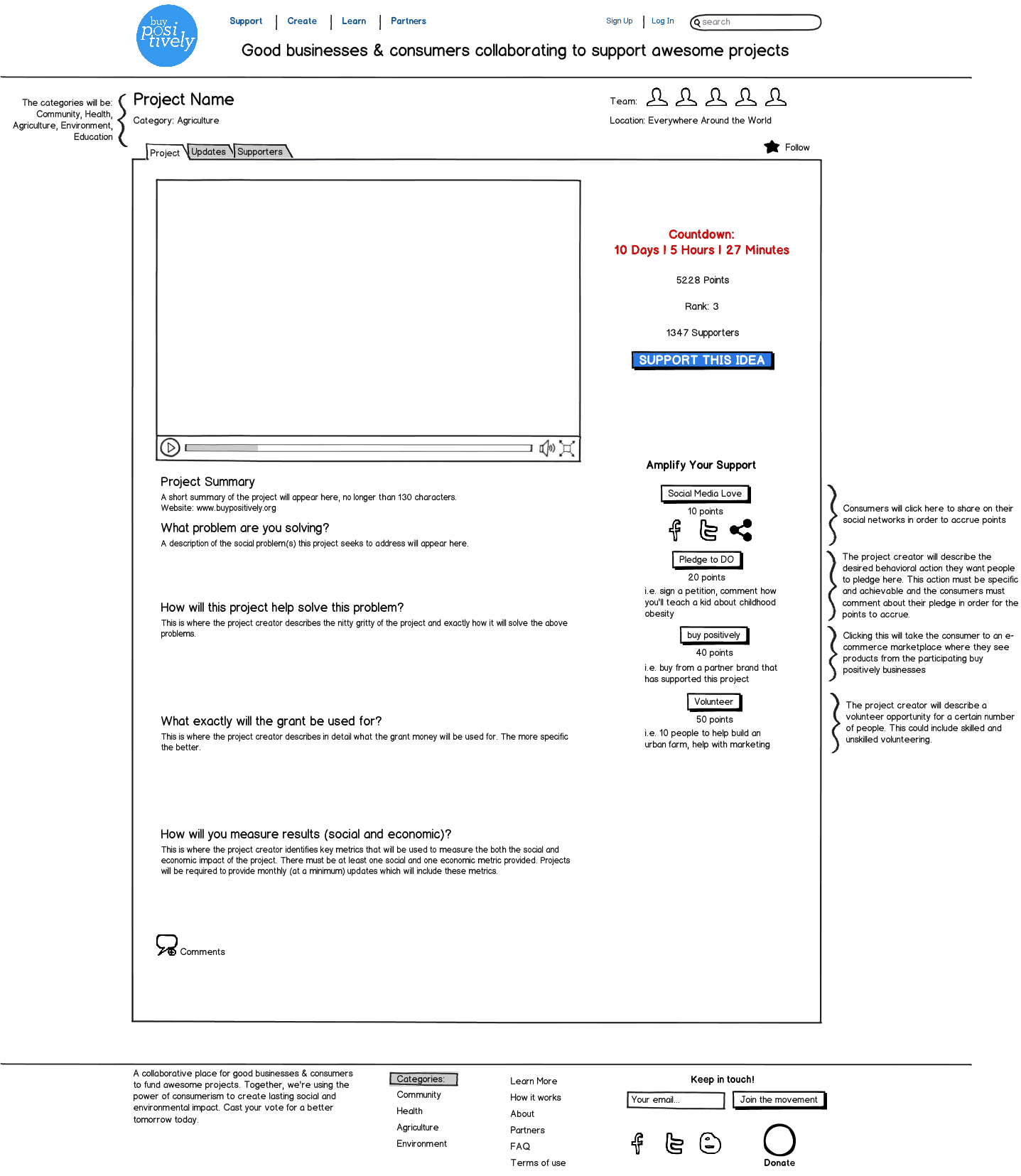
Buy Positively, the project page in wireframe. - 2012System SolutionsFamily business
I rebuilt the accounting systems and dashboards at my dad’s IT business in Northbrook. In 2015 he was one of my partners when we bought Casa Oro.

Northbrook, Illinois, January 2013. - 2012Lake ArenalThe idea
The night I wrote down the idea I’m still building.
- 2013Rancho MargotVolunteer
Shoveling compost, cleaning the corrals, and building them an Excel farm-management system on the side.
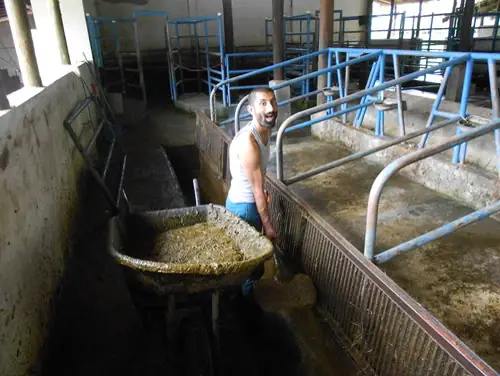
Compost duty, Rancho Margot, Costa Rica, 2013. - 2013

Finca Bona Fide, Ometepe, Nicaragua, 2013. - 2013The Río San JuanPaddled it
About 140 km of jungle river, from El Castillo to the Caribbean, in a rented canoe. I’d been in a kayak or canoe twice in my life and had never steered. We worked it out on the water: the paddle behind the boat, like a rudder.
What I wrote then
- 2011 to 2013The Buy Positively years
- 2013Lessons from the Río San Juan
- 2013The 2013 photo stream
- 2011Thanks for your inspiration I the simple good official blog launch
- 2013First Day Working at Rancho Margot
- 2013Temporary office (at Project Bona Fide)
- 2013Lessons from the Rio San Juan
What I learned
Nature has had billions of years of research and development. On those farms I started seeing answers to our problems in its patterns, and I haven’t stopped looking.
- 2011
2013 to 2014Experience Instituteecology, community and business, in practiceFounding student
In October 2013 I was at Geoff Lawton’s Zaytuna Farm in Australia, earning a Permaculture Design Certificate and writing one post a day. It was the first of three apprenticeships in my founding year at the Experience Institute, all where ecology, community and business meet. After the course I stayed to help Clear Springs Sanctuary, a retreat center, get off the ground: I brought the team together, wrote the business plan and built the financial model. After Typhoon Haiyan I went to Leyte, in the Philippines, for the Windship build: I ran procurement, built, told its story and helped host volunteers in the camp. Then Leo Burnett in Chicago, doing design thinking with their chief innovation officer.
What I did
- 2013

The Experience Institute’s founding class. - 2013Permaculture Design CertificateStudent
Geoff Lawton’s Zaytuna Farm, Australia, October 2013. One post a day.
- 2013Clear Springs SanctuaryApprentice, then planner
A retreat center in New South Wales. I wrote the business plan and the financial model; after I left, the team raised more than $500,000 and bought the land.

The market garden. - 2014The WindshipProcurement, building, storytelling
After Typhoon Haiyan, in Leyte, the Philippines: a typhoon shelter of recycled and natural materials, designed by Earthship Biotecture. I ran procurement, built, told its story and helped host volunteers from around the world. It has since sheltered people through later typhoons.

The Windship, Philippines, 2014. - 2014

Walking through a storyboard.
What I wrote then
- 2013 to 2015Experience Institute
- 2013Permaculture Design Course, ten days
- 2013Why I’ve Joined The Experience Institute
- 2014The Windship Has Landed
- 2014Reflection is Learning
What I learned
Practice turns ideas into confidence. A business plan I wrote in Australia helped the team raise more than $500,000 after I left. That’s when I knew I could help other people build these things, not only admire them.
- 2013
2014 to 2018The builder in San Juan del Sura hostel, a farm, then five guesthouses and a caféFounder, designer, builder
In 2015 we bought the land in El Carrizal first. That October, with partners, I bought the first hostel in San Juan del Sur. It was already called Casa Oro. I’d been calling the idea Círculo, and Rancho Regeneración was its land; Círculo never became one company, it became everything in this chapter. Casa Oro Group grew from there: five guesthouses, a café, tours and shuttles, an artist residency and a volunteer program, the farm and the remodels. I just wanted to farm and build some structures. I couldn’t help myself: I got into business. I did the design, the architecture, the engineering and the calculations, and built every one with local crews, in Spanish, down to making the beds. I tried a lot. Some of it worked, some of it taught me the hard way, and a few things are still standing out of pure stubbornness. I also started writing a book. It isn’t finished yet.
What I built
- 2014CírculoFounder
What I called the idea in 2014, before we had land. It grew into everything in this chapter.

San Juan del Sur, where the idea took root. - 2015Rancho RegeneraciónDeveloper and designer
80 acres in El Carrizal, 6 km south of town, now a private wildlife reserve registered with MARENA, Nicaragua’s environment ministry. A well with a solar pump, a road, a bridge over a ravine, a compost and recycling center, more than 10,000 native trees, turmeric and tropical fruit, and the earthbag dome.
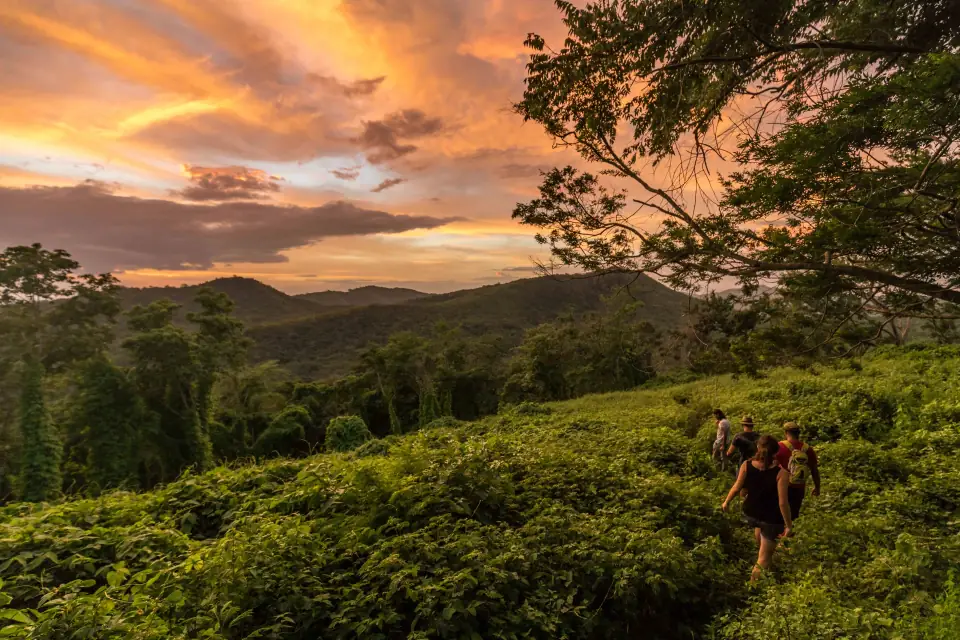
Rancho Regeneración, sunset. - 2015Casa OroPartner and operator
The town’s first hostel, with a surf shop, bought with partners and already called Casa Oro. I kept the name, and everything that grew out of it became Oro.

Casa Oro, the restaurant on a busy evening, San Juan del Sur, 2024. - 2016The remodel, and Café OroDesigner and builder, twice
Late 2016, in four months: a third floor on the hostel, wraparound balconies, a commercial kitchen, a bar, murals by 15 artists, and the first Café Oro, with my reclaimed-wood furniture, chairs with round holes in the backs and cable-spool tables. We reopened on 19 January 2017. In late 2023, the same months Oro opened in Chicago, I remodeled it all again. That’s the Casa Oro you walk into now.

Café Oro today, after the 2023 remodel. - 2016Nuestra CasaDesigner and builder
A dilapidated house turned into a six-bedroom guesthouse with a 10-meter water-tower lookout. It opened with an Art-A-Thon: ten artists, and that launched our artist residency.

Nuestra Casa, sunset from the rooftop, San Juan del Sur. - 2016Casa AndalucíaDesigner and builder
Bought with one room and two cabins. I built the bamboo and bottle-wall cabin with the round window. In October 2017 a tropical storm brought the hill down, so I rebuilt into it: retaining walls, cabins set into the slope under green roofs, a yoga platform for 25.

Casa Andalucía, above the bay, San Juan del Sur, 2018. - 2017

El Pacífico, rooms off an outside stair. - 2017Casa RuthDesigner and builder
An abandoned house, gutted and rebuilt with a crew of ten: rewired, exposed brick, a new roof insulated with straw.

Casa Ruth, the terrace over the bay. - 2017

On stage at the World Domination Summit, 2014.
What I wrote then
- 2015Seven days of the Your Turn Challenge
- 2017The book
- 2015Hope for One More Block
- 2015La Nina: Semana Santa in San Juan Del Sur Nicaragua
What I learned
I did the design and built it with local crews, in Spanish, down to making the beds. Then I trained a team to run the houses, and over time I designed myself out of the day-to-day.
- 2014
2018 to 2020The pivotbamboo, earth, then chocolateStudent again, then chocolate maker
In 2018 I went back to school, my way: a bamboo trip to the Green School in Bali, then the Earthship Academy, learning to build with earth, sun and rain. I came home and built a prototype on Rancho Regeneración: an earthbag dome with earthship systems inside. The structure was finished in June 2019, the bamboo and furniture inside by early 2020. Then I turned toward a product. I wanted a business regenerative to the core, and I found it in Nicaraguan cacao. I started spending my time in the jungle with cacao farmers, and fell for the tree itself. It looks like it came from another planet: red and yellow pods growing straight out of the trunk. Ingemann’s cacao has won Cacao of Excellence three times, and almost nobody outside the chocolate world knew. It felt like finding a secret. I went deep. Oro Chocolate began in 2019, in the kitchen of El Pacífico. In February 2020, at an airport in Costa Rica, a field drug test misread my chocolate. I was wrongfully arrested and spent three and a half months under house arrest until a lab cleared it. Then I came home and went even deeper into chocolate.
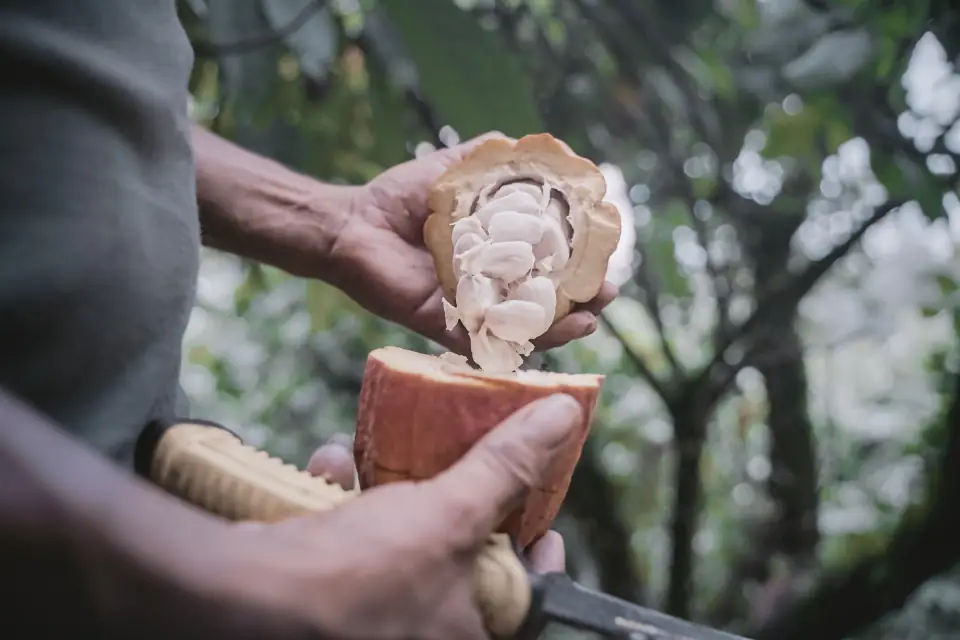
Nicaragua, a cacao pod split open. What I made
- 2018Bamboo and earthStudent, then builder
A bamboo trip to the Green School in Bali, the Earthship Academy, and an earthbag dome on Rancho Regeneración.
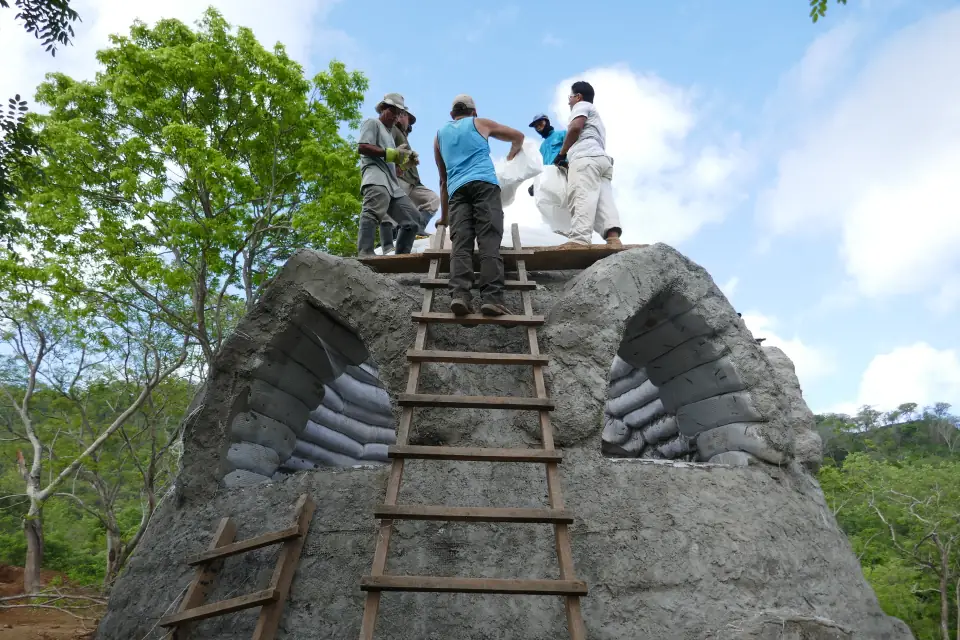
Rancho Regeneración, the earthbag dome under construction, 2019. - 2019
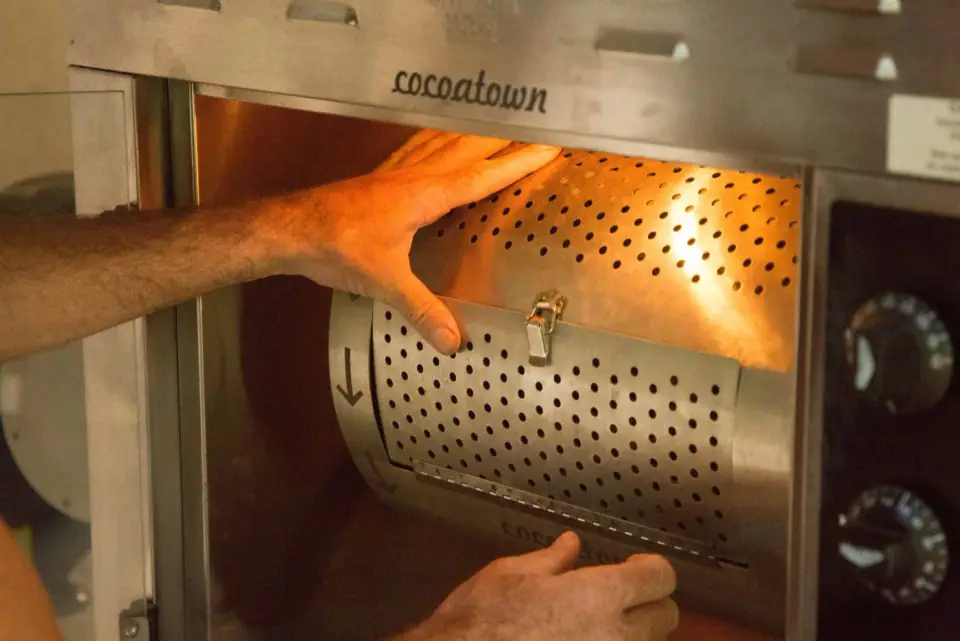
The Oro factory, Nicaragua, 2020.
What I wrote then
What I learned
Quality is decided upstream: in the soil, the fermentation, the drying, weeks before anyone tastes it. And the value should be added close to where things grow.
- 2018
2021 to 2023A shoe store into a chocolate shopWicker Park, ChicagoDesigner and builder
In August 2021 I bought the old shoe store at 1553 N Milwaukee Ave and spent two years designing and building it. Oro Chocolate & Coffee opened in November 2023: the roaster and the chocolate line behind glass, facing the street. Everything I’d learned in Nicaragua, about farms, factories, hospitality and building, came home to Chicago in one room.
What I built
- 2023Oro Chocolate & Coffee, ChicagoFounder, designer, builder
A roastery, a chocolate line behind glass and a café, in a former shoe store I redesigned and rebuilt.

Oro Chocolate & Coffee, the long room, Wicker Park, 2026.
What I learned
Design is a thousand small decisions, and each one can be a little more regenerative. When it got hard, I took over the build and finished it.
- 2023
2022 to nowConnecting it allfrom the start of the chain to the end of itPartner, CFO, operator
I kept asking where things actually come from, and kept getting answers that stopped short. So I went to the start of the chain, the end of it and everything in between: Reserva Los Nogales and its coffee, Ingemann’s cacao and honey, the shop in Chicago, and the software that connects them.
Pod to bar, every step in our hands. What I’m building
- 2022Reserva Los NogalesManaging partner
A rainforest reserve at 1,000 meters on the edge of the Bosawás Biosphere Reserve, after more than 15 years of letting the forest come back. I came in 2022 for the coffee and stayed as a partner. Since then we’ve built a new restaurant and two new cabins, invested in the coffee farm’s agroforestry, and brought its coffee to Oro in Chicago. We built it to fit the mountain, so more people come to know it, and the water it holds.
- 2024IngemannPartner and CFO
Fine cacao from more than 1,000 farming families, and more than 345 international awards for the cacao and the chocolate made from it, from the Cacao of Excellence to the Good Food Awards. Raw wildflower honey, organic and certified, from more than 100 beekeepers across Nicaragua. And an agroforestry program that has planted more than a million trees.

Ingemann, the fermentation room, 2026. 
Wild honey from Ingemann’s hives. - 2026The operating systemSystems and software
Software for the four companies, still being built, with one shared memory underneath, so I can see the whole chain, from the farm to the shop, in one place.
What I learned
It’s a small miracle that chocolate exists at all. A pod cut from a tree in a Nicaraguan forest is fermented, dried, shipped, roasted and tempered, and ends up on a counter in Chicago. I get to touch every step, and I’ve learned how hard it is to keep every one of them clean. So: know where things come from, and leave more than you take.
As I told the Chicago Reader in 2024: “I needed to figure out how I could build a bridge between the hippie world and the business world.”
- 2022
Curiosities
What I’m trying right now, and what it’s teaching me.
- The domeAn earthbag dome on Rancho Regeneración with earthship systems inside: a prototype for building that gives back more than it takes.You only learn a building by living with it. I watch what holds up, then decide what belongs on the rest of the farm.
- Value added where it growsTurmeric, tropical fruit and other crops on the farm, grown with the forest instead of against it, with the plan to process them where they grow.Same idea as cacao into chocolate: keep more of the value, and the work, near the farm.
- At IngemannA biological input meant to help cacao defend itself and yield more, in early trials with a PhD scientist and a handful of producers. Queen bees bred for stronger hives. Fermentation and drying trials. And matching a flavor profile, even one from another origin.Anyone can get one good batch. Repeating it is the work. The wins are small and slow, and they add up to the premium that keeps a farmer growing cacao in the forest.
- At Los NogalesRegenerative coffee fed with minerals, clay and microorganisms from the forest floor, beside land we leave completely alone.Sometimes the best intervention is none. The untouched land is showing the farm what to copy.
- An ecosystem of businessesA guesthouse group, a chocolate company, a rainforest reserve and a cacao exporter, run between Nicaragua and Chicago and built to feed each other, the way a forest does.Mentors keep telling me to focus. I’m still working on it. But a forest doesn’t grow one tree at a time, and the hard part isn’t the businesses. It’s the human systems that hold them together across two countries.
- The operating systemSoftware for our companies, still being built, and under it a shared memory, a second brain for the whole group. It keeps every meeting, email and decision, works through the night, and each morning tells me what needs a person.I’d never written software before March 2026. Now I’m learning the fundamentals: software, systems, how an organization actually works. I’m looking for where they meet the way nature works.
Then and now
A shoe store into a chocolate shop
In 2021 I bought a former shoe store on Milwaukee Avenue and hired a contractor to build what I’d designed. You may have heard how that kind of story goes. Two years later I’d ended up as my own general contractor.
Oro Chocolate & Coffee opened in November 2023, with the chocolate line behind glass, facing the street.

 20212026
Selected writing
A few pieces worth your time, by series. All the writing
Letters from abroad
Kenya: The most challenging summer of my lifeMy first summer abroad: an internship that did not exist, a stutter, and Mount Kenya in running shoes.
2007
Lessons from the Río San Juan
Lessons from the Rio San JuanA rented canoe, no guide, and a jungle river. I had paddled twice before and never steered.
2013
Permaculture Design Course, ten days
Permaculture Design Course Day 10: Strategies for an Alternative Global NationOn the last day of a permaculture course, I realized money behaves like water.
2013
Experience Institute
The Art of StorytellingI spent most of my life with a stutter. Then I found out I come from storytellers.
2014
Essays and field notes
Chasing Surf in LifeLearning to surf with a scraped belly, a rogue set and a fear of water from childhood.
2014
Seven days of the Your Turn Challenge
How to Be the New GuyHow I went from the late guy at a Tulum beach potluck to learning my first guitar chord.
2015