
This is the reflection I wrote after my powerful experience spending the summer in Kenya doing a developmental intership.
Here is the whole summer, as I wrote it for my classmates in 2007:
“AHHHH!” I yelled after pouring steaming hot water all over myself. I quickly realized I must dilute the water in this oven-heated bucket with colder water from the tap in a new bucket and then pour it all over myself in order to avoid any further third degree burns. Taking early-morning Kenyan bucket showers is a lot tougher than it may sound, especially while being jet-lagged. I arrived in Kenya at Jomo Kenyatta International airport in Nairobi the night before (early June). After finally clearing customs, I started marveling at the fact that I was seriously in Kenya, and I couldn’t believe it. I walked outside the busy terminal and after much frantic searching; I finally found the AIESEC representatives who had come to pick me up from the airport. Everyone around was wearing sweaters and jackets, and complaining about the cold, and it was kind of amusing seeing as I thought the weather was perfect. Their ‘winter’ is more like our spring, so it was around 65 degrees and breezy that night, and everyone was freezing.
Last spring, I applied for developmental and managerial internships around the world, with the help of AIESEC, the world’s largest student-run organization. I decided I wanted to do a developmental internship. I know I am probably going to be working with something related to business for the rest of my life, so I decided I wanted to do something completely different, something I would never get to experience otherwise. I ended up choosing the ASK project run out of Kenya, which is a voluntary educational AIDS awareness program.
My first day in Kenya, after taking my ‘shower,’ I waited on a street corner to catch a matatu going to town. Matatus are the main form of public transportation in Kenya and much of East Africa. They sometimes come in the form of minibuses, but more commonly 14-seater Nissan or Toyota HIACE vans. Some of them are painted exotic colors, have loud music with pimped out sound systems, neon lights, and full size televisions or LCD screens, while others are more tame. The drivers are rough to the extreme; they own the roads in Nairobi. Everyone always yields to them, it’s like an unwritten rule (not that the written rules are ever followed). All traffic signs, signals, and laws are more suggestions than anything else. No one drives in lanes, and seeing matatus speed by on the sidewalks trying to advance through traffic jams is a perfectly normal every-day occurrence. I feared for my life every time I got into one of these, or tried crossing the street just about anywhere in Nairobi. I have newfound meaning for the saying, ‘You could die crossing the road.’
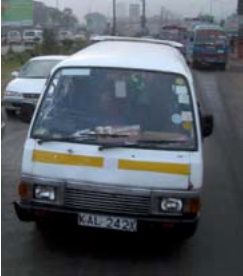
I waited for about 10 minutes and one of them slowed down, and came to an abrupt stop on the side of the dirt road. As I was climbing into the matatu, with one foot still outside the vehicle, the conductor tapped the side of the van yelling “twende twende!!” and the driver sped off, as I struggled to awkwardly thrust myself into the vehicle (twende means ‘let’s go’ in Swahili). The music was unbelievably loud, much like an insane rock concert, and the seats were springy with no legroom. I gazed out the grubby window with disbelief observing the desolate streets filled with trash and utter poverty while the song ‘Changes’ was pumping out of the speaker right above my head, and as Tupac sang, “Things will never be the same, that’s just the way it is,” I thought to myself, TIA: This Is Africa.
From town we took another matatu to Jamhuri High School, where I taught the ASK program. We waited around for about two hours in order to speak with the deputy principal. We finally met him and talked about what I could do there. To my unpleasant surprise, he told me I couldn’t teach anything there because I am not a teacher, so I am not qualified to teach in a classroom, but it would be okay if I did the ASK project after school as an extra-curricular activity. I had come with all these expectations about great stuff I would be doing in the classroom, teaching kids about business, and just being busy all the time helping people. These expectations of what I was going to be doing were shot down the drain, and I hadn’t even been in Kenya for 12 hours yet. I learned very quickly that I had to be a lot more patient and open to inefficiency.
I had extreme difficulty adjusting and feeling comfortable in Nairobi at the start; all I wanted to do was come back home or go back to Brazil. My internship was not what I thought it was going to be, and I was generally upset and frustrated with everything, but I kept a smile on my face. I tried to keep my purpose in perspective, so I took the initiative and searched for other ways I could make a difference. I got into contact with an NGO (non-governmental organization) called The Humanist Centre, who introduced me to Kibera.
Kibera is one of the biggest slums in the world and it is home to almost half the population of Nairobi, about 1.4 million people. A representative from the NGO, who lives in Kibera, took me to the homes of people his organization supports and gave me a tour of his home. The average family comprises of a mother/grandmother with 2-3 of her own children and 2-3 orphans living in a space the size of a dorm room. There is no electricity, no bathroom, no fridge, none of the modern conveniences we take for granted. All they have is a bed or two and a place to sit. Although there are a few public toilets around, there is no proper system for disposal of human waste. So, many people do their business in a bag, tie it up, and throw it as far as possible, they call it flying toilets. There is trash everywhere, bumpy dirt roads, and living conditions are extremely dense. The residences and shops are mostly built from mud and have tin roofs. Walking around, seeing how people live and do business is completely disconcerting.

The morning routine for restaurant owners in Kibera is particularly interesting. Every morning, I see a bunch of men in their normal street clothes, walking around with an entire cow hide on their shoulder. Yes, that is correct, an entire cow hide! There are bugs flying all around the hide, and often it drags along the ground if the guy is short. He never has any covering for the meat or gloves to keep sanitary either, just the raw cowhide and his dirty shirt. He dumps the cowhide on a table (which is later used by customers to eat on) in the restaurant and proceeds to cut it up into servable pieces right there. He tosses them into the back where they are prepared, and then served to order. These places would always serve a beef dish called nyama choma, which is charcoal grilled beef that is dipped in salt and eaten with ugali (staple food made from corn with a pasty consistence). Kenyans love this food, and you can get it just about anywhere in Kenya. It doesn’t sound too amazing, but trust me, this stuff is great, and the best nyama choma I had in Kenya was from places like this in Kibera.
It is amazing seeing how people live, even in the worst conditions. Life goes on for them, however, just like anyone else, so they continue living and functioning normally. It just goes to show how little we actually need in order to survive.
In most Western countries, we usually associate Africa with namely two things. The first being dismal living conditions with that famous image of the deathly skinny kids orphaned by AIDS, wearing ripped rags, with bugs flying around their faces. The second is The Lion King, and exotic animals all over the place. Moreover, we have a tendency to think of Africa as one entity, kind of like its one place with very little differentiation.
In reality, Africa is an extremely diverse continent, comprising of 53 different countries, and it is the second largest and second most populous continent in the world, after Asia. Africa is not just one place and every place and everyone in Africa really isn’t the same, it’s all different and unique. Also, not everything in Africa resembles the image you might have in your head about what African life is like. There is extreme wealth all over the continent, and there are people living lives like kings, much better than the average American. There are huge shopping malls, nice restaurants, ritzy clubs and hotels, and all that kind of stuff associated with the developed world through out Africa. Nairobi, for instance, is much like any other major city in the world. There are skyscrapers and everyone is walking around in suits and ties, and it is business as usual. The average person walking around in Nairobi is probably better dressed than the average person walking around in Chicago, everyone here wears suits and ties. There are many ways of life in Africa, and the Western world tends to focus on the negative things, however, there is much more than just all that bad stuff we hear about in Africa, and it’s getting better all the time.

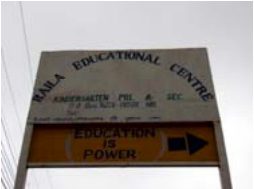
I talked to the principal at a community school in the middle of Kibera called Raila Educational Services, which is a k-12 school. I wanted to do something in education because half of Kenya’s population is under the age of 18, and nearly 70% is under the age of thirty (the same is true of many African countries). With such a huge proportion of the population being youths, proper education can lead to empowerment of these youths, and this has the potential to transform Kenya, even all of Africa, but it is obviously much more complicated than it sounds.
The principal at Raila was very enthusiastic about me wanting to teach there, and he said I could start immediately. The high school was grossly understaffed and many classes had no teachers at all. I talked to the teachers and figured out that they needed the most help in mathematics and business studies. They said I could teach form 3 students, which is the equivalent of high school juniors, so I borrowed the books for the classes and started preparing my lesson plans. I taught probability in the math class, and the fundamentals of accounting in the business class.
Teaching was unbelievably difficult. I have never taught before in the traditional sense, and my classes packed with Kenyan teenagers living in some of the worst conditions in the world didn’t make it any easier, not to mention my speech impediment, stuttering. Most of the kids did not have books because they couldn’t afford them, and had never interacted with a foreigner before; much less an American who everyone thought was Irani. Based on previous trends, about half of them would drop out, or would not be able to afford further schooling after this year, and none of them would make it any farther than high school, in terms of education. Moreover, a meager 1.5% of Kenyans make it to the university level (I heard this in a speech given by a Kenyan executive). University in the Western sense is the logical next step after high school, nothing out of the ordinary. It’s actually an elite privilege enjoyed only by select few.
I started out teaching, trying to mimic how I had been taught in high school, but immediately I discovered this style would be extremely ineffective, as these children are not the elite few. Because most of them didn’t have books, and my accent was difficult for them to understand, I had to write everything on the board, and talk slowly, often times repeating myself. I was really nervous in the beginning and was stuttering more than usual, which many of the students found rather amusing. Sometimes, I would think to myself, why would anyone in their right mind volunteer for this kind of torture? I voluntarily take all this time and effort to come and help these kids, and I am taken advantage of because I am a mzungu (foreigner in Swahili), ridiculed because of the way I look, and laughed at because of my stutter by the people I am trying to help! Why would I even want to help these people? I kept my purpose in perspective though, and continued on the best way I knew how with a smile on my face.
The students were used to writing down everything the teacher told them to, stifling the idea of thinking for themselves. I knew it would be impossible to change their mentality in less than two months, making me wish I could have stayed longer and tried to accomplish this. I tried my best, however, to help them think for themselves. I would try and ‘lecture’ for about half the time, and then give them problems and examples to do on their own or in small groups for the rest of the time. As they do the problems, I walk around and answer questions or help them out, and give hints until most of the class completes the problem. Then, I go through it on the board with the whole class getting them to explain their thought process to me. This allowed them to put what I was telling them into practice and try it out for themselves, something that seems rather elementary for someone from the developed world, but a foreign concept for these students.
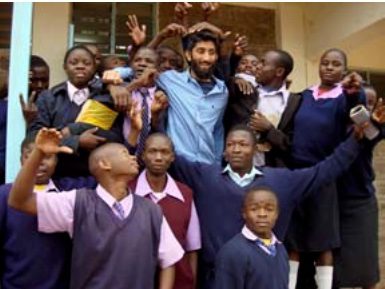
As time went on, the students and I got more comfortable with one another, and got to know each other better, everything was paying off. The other teachers would tell me about how the students wouldn’t stop talking about how much they liked having me as a teacher. I missed one day of class because I was climbing Mt. Kenya, and didn’t tell my students. The teachers said all the students were afraid I had gone, and were asking about where I was and why I wasn’t there and when I was going to be back. As exam time came around, I had my final day teaching in Kibera. All the students and staff were extremely grateful for my meager impact, and I was very sad to leave. My experience teaching here was amazing. This was one of the most difficult things I have ever attempted, and it is amazingly rewarding to see the results of my efforts with these students.
I still wasn’t completely satisfied, however. I wanted to do more, so I got into touch with a children’s home called Stars for Jesus through AIESEC. It is located in Marurui, a small shanty town in the outskirts of Nairobi. The home takes in boys aged 11-18 off of the streets where they would be selling drugs or stealing, and other such no good deeds. The home provides the kids with a place to stay clothes, food, and funding to go to school. There are a couple of boys who are now studying in medical schools in Uganda, and even a couple in the United States and Canada. The home helps transform the lives of these boys. Initially, I thought I was going to be helping out with social counseling, and just interacting with the boys. When I started going, I discovered that there was no organized system of keeping track of anything: no financial accounting, no measuring of how much money is being spent, how much money is coming in, no way of keeping track of kids they have taken in, no way to keep tabs on their progress.
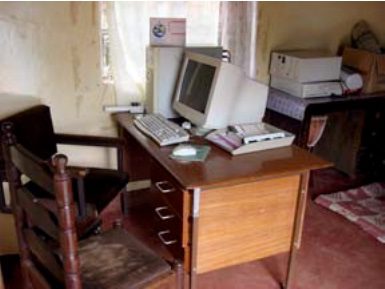
I told the pastors who run the home that I study accounting and finance in the US, and I can help them out with their record keeping, and they were very enthusiastic. I sat down with their primitive ‘record’ books and created a bunch of easy to use excel spreadsheet templates in order to keep track of essentially everything that happens there. The spreadsheets organized all the stuff that had to do with money by month and day and I linked them all to have summary formulas that automatically calculate all the numbers they need to know so that they can run efficiently and know what is going on at any given time. The toughest part about working here, however, was that the power would always go out just as I would finish a key component of the spreadsheet. The cursor would be over the save button, and just as I am about to click it, everything goes blank. This was really frustrating, but I learned to hit the save button a lot more often, and I got it all done eventually. After completing it all, I taught the pastors how to use excel and the spreadsheets I created, showing them that all they need to do is punch in the numbers and the program will do the rest. They were very thankful, and optimistic that they would now be able to run the home much more efficiently and waste less.
My original program that I had come for was the ASK AIDS awareness program which I conducted along with another AIESEC intern from Uganda. We taught mostly high school sophomores and juniors about various aspects of human development, sexuality, stereotypes, gender roles, and so on in order to help them gain a better understanding of how AIDS spreads and how to prevent it.
This program was especially interesting because we had to cover all kinds of subjects related to AIDS. My partner and I had very different opinions about things such as gender roles and stereotypes and we would have heated discussions on most of the topics before we presented them to the class. Kenyans have very different opinions about gender roles and anything sexual in general as compared with Westerners. Sex usually isn’t talked about much, and thus people tend to be uneducated regarding AIDS. For instance, there was another intern from India conducting a similar program for married women in a slum, and she told me most of the women in her program didn’t even know what AIDS was! Thus, I felt it was paramount that I be as open and explicit as possible when teaching the students in the ASK program. This was challenging because my 26-year old Ugandan partner had a very similar mentality as the Kenyan students. I had to make sure that I always voiced my relatively ‘liberal’ Western opinion; challenging the students and my partner to think of things in a completely different way. It was exhilarating; we had lots of great discussions about controversial topics where I would be the only person arguing one opinion (whether I believed it or not), while everyone else supported the opposite. But of course, all good things must come to an end. By the middle of July, all the schools in Kenya have final exams so around that time, I finished up what I was teaching, said my goodbyes to all the kids, and sadly my internships came to an end.
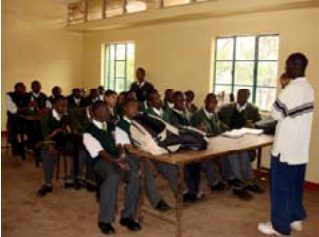
I spent my summer teaching an AIDS awareness program at a public high school in Nairobi, teaching business and math to high school juniors in Kibera, and creating a system of accounting for a children’s home. Everything started out horribly, adjusting to the culture and people seemed impossible, my internship as I understood it never actually existed, and all I wanted to do was go home. By the end of it all, I was completely immersed in the culture, I felt like I was an integral part of the three places I helped out at, and all I wanted to do was stay longer.
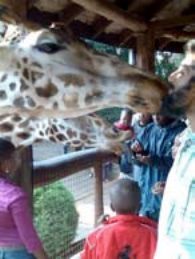
Outside of ‘work’ I did a lot of exploring as well. For instance, the first weekend I went to Lake Naivasha and saw Crater Lake, and climbed up Mt. Longanaut. The weekend after that I went to the giraffe center and fed giraffes, I even kissed one! I went to the Nairobi National Park and petted cheetahs after bribing the gate-keeper, and I went to a crocodile park and fed ostriches. I really liked going to all these places with locals because they knew the best way. I spent a couple weekends exploring Nairobi as well, just walking around and trying to become a Kenyan.
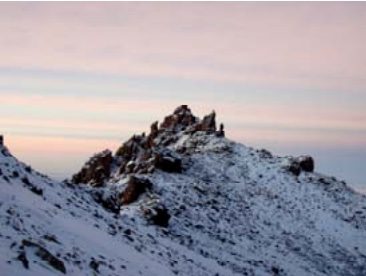
The first weekend in July, I climbed Mt. Kenya. Mt. Kenya is the second tallest mountain in Africa, and it is the tallest mountain on the equator. It is a 4-day climb, and even though it is not as high as Kilimanjaro, it is significantly more difficult trek due to the slope and nature of the terrain. I went with a group of 14 people and we had a guide and porters who carried our food, while each of us carried our own gear the whole way up (most people have porters carry all this stuff). It takes 2 days to get up to the base of the peaks. After a long day of climbing through hot sunshine, rain, sleet, hail, snow, and mud everywhere, we rested for a ‘night’. We were all exhausted and cursing the mountain and whose ever idea it was to climb this damned mountain. Then, we woke up at 2AM in order to start the final ascent up to the peak so that we could see the sunrise from atop the mountain range (this is when it is most clear- on extremely clear days, you can see Mt. Kilimanjaro from the top of Mt. Kenya).
The terrain up to the peak is full of rocks. Due to the variable weather over the past couple days, the rocks had a sheet of ice blanketing them, along with 2-3 inches of snow. Consequentially, it was near impossible to step anywhere without losing my footing, and my running shoes meant for a dry indoor track didn’t make things any easier. Every time I slipped, I would cling onto the rocks for dear life, as it would have been a fatal trip down if I didn’t. I had cloth gloves that were soaked, so I had no feeling in my fingers, or much of my body for that matter. I had no food in my body either (altitude sickness made whatever I put in come out). I was running on pure adrenaline, on this high induced by fear, and it was out of this world. I could feel my heart beating faster and faster, and it just kept pushing me to go further and further, until I could go no further.
There I was, standing on top of Mt. Kenya. I could feel nothing anymore. I forgot about my altitude sickness, and the cold, and everything that was aching, and the exhaustion, nothing mattered because I was on the top. Standing up there all alone was quite humbling. The view was similar from up top as it was from the earlier point where everyone else stopped (everyone else turned back because the guide said it wasn’t safe to go to the peak because of the snow and ice), but it felt entirely different. I felt like everything was so much bigger and that I was so small. Standing there alone made me realize how small I really am in the grand scheme of things and that were all part of this cycle that is so much bigger than any of us could ever imagine, yet each individual component is necessary in order to make the whole function properly. It sounds fundamentally simple to understand, but standing up there was a completely different level of understanding. After experiencing things, my understanding is significantly altered.
The next weekend I went to Masai Mara National Park. This is where the annual wildebeest migration occurs when thousands of wildebeest migrate from Tanzania in Serengeti National Park to the Mara. It is considered one of the wonders of the world, and we planned our trip with the intent to be able to witness it. Unfortunately, since the period of time that this occurs changes slightly every year, it is impossible to predict and we were about one week too early.
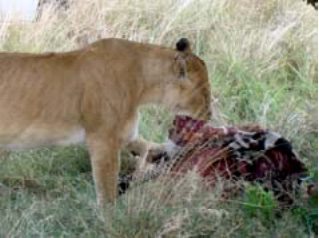
We saw lots of animals up close and it was awesome to be able to see them in their natural habitat. After going on a safari, I don’t think I will ever really enjoy the zoo in the same way again. The most memorable part of the safari was finding a herd of lionesses that had just caught a fresh zebra. There were 5 or 6 of them lying underneath a little tree just devouring the zebra. It was unreal sitting there in our safari matatu, a couple feet away watching the lionesses feast on the zebra. I saw the skin being stretched and ripped, and even heard ribs cracking as the lioness devoured it. It was one of the most terrifying sounds I have ever heard and it was absolutely amazing.
The image I had in my mind before I came to Africa was mostly from The Lion King, and up to this point, that image was completely invalid. I thought Africa was all about that big orange sunset and lots of animals everywhere, and those peculiar trees that are flat on top. I learned that this part of Africa mostly exists for tourists on safaris, and it’s actually kind of an escape away from true African life. Most Africans, even Kenyans have never been on a safari, even though Kenya is safari capital of the world.
After getting back from the Mara, I spent one night in Nairobi, and the next day I headed off to Uganda by bus with a couple of guys from AIESEC. Our trip had a great start with the bus leaving 3 hours late, and breaking down in the middle of no where for about 5 hours. The total journey to Kampala, capital of Uganda, took 23 joyful hours.
The only thing we had semi-planned before leaving Nairobi was going white water rafting at the source of the Nile and bungee jumping. I thought I would stay in Uganda for a couple of days at most, and then head back to Nairobi. I ended up backpacking all corners Uganda for 10 days, and did all sorts of crazy things. I would stay in the shadiest hostels I could find, eat local food for as cheap as possible, and take public transportation everywhere.
I went white-water rafting at the source of the Nile in Jinja, and bungee jumping, both of which were terrifyingly amazing. The Nile is one of the best places in the world for white water rafting and I almost died at least 5 or 6 times trying to survive after getting thrown off the raft into the mighty Nile rapids, and it was unreal. I went to Fort Portal and saw the Crater Lakes which was very peaceful and there weren’t any tourists around. I trekked around the base of the Rwenzori Mountains which is the largest mountain range in Africa, and it makes up the border between Uganda and the Congo. I went on a safari on the Nile River at Murchison Falls National Park where I saw hundreds of hippos and crocodiles just chilling out in the Nile. It all led up to Murchison Falls which is a waterfall where the Nile River falls through a gap of 15 feet or so, and it is extremely powerful. I tracked chimpanzees in a jungle. When we finally found them, two groups of chimpanzees were in the middle of a territorial battle and they were loud, pounding their chests, and making all these scary noises. They were jumping all around through the trees trying to scare off one another, and it was unreal. Finally, I abseiled (propelled down on a rope) down Sipi Falls, a 100m waterfall considered to be the most beautiful waterfall in Uganda, and my ‘vacation’ was over.
We arrived back to Nairobi early in the morning, and it was a really odd feeling; I felt comfortable. I felt like I knew the place, as if I was home again. It was really odd having this feeling in this place that is half way across the world from the place I have always called home. I spent my last couple days in Nairobi hanging out with the friends I had made, and figuring out stuff for Singapore. I felt so comfortable in Nairobi now, drastically different from what it was like in the beginning. I was so accustomed to life as a Kenyan, that people I didn’t know on the street or in restaurants would talk to me in Swahili because they thought I was a Kenyan. I would respond back with the few key phrases I knew and they would never guess that I wasn’t a Kenyan, much less an American. Just as I felt that I had become fully attuned to life in Kenya, and comfortable with all the friends I had made, it was time to go. Leaving Kenya was really sad, and I wish I could have stayed longer and done more, but my time was up. It was an indescribable experience, and any words I have to describe will never be able to give my experience full justice. I have learned and developed immensely in ways I didn’t know were possible.
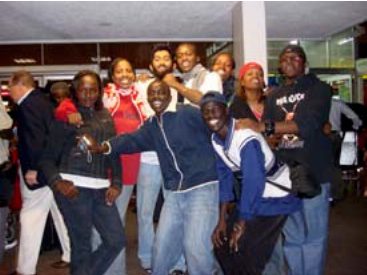
From Nairobi, I got on a flight to Singapore for my semester study abroad program, and I have been here for about 6 weeks, starting from scratch again. Hopefully, I will be like a Singaporean soon enough. I am thrilled for traveling all over as much of South East Asia as I can, and eager for more adventures.
It’s not all about the destination; it’s the journey that really matters.